I'm honestly not. Desktop platforms like Windows are incredibly niche. How much rust software actually runs on those? Some, of course. But probably an incredible minority.
Supporting them is smart because people expect it, and not supporting it would be bad optics, but if a language legitimately only targeted Linux, and was better for it, I'd be fine with that - they target the most popular OS by far.
I am a Windows user, so all of the Rust software I use runs on it. And that’s virtually all Rust software. Sometimes you need a small patch or two because someone did something weird with path handling, but 99.99% of it Just Works.
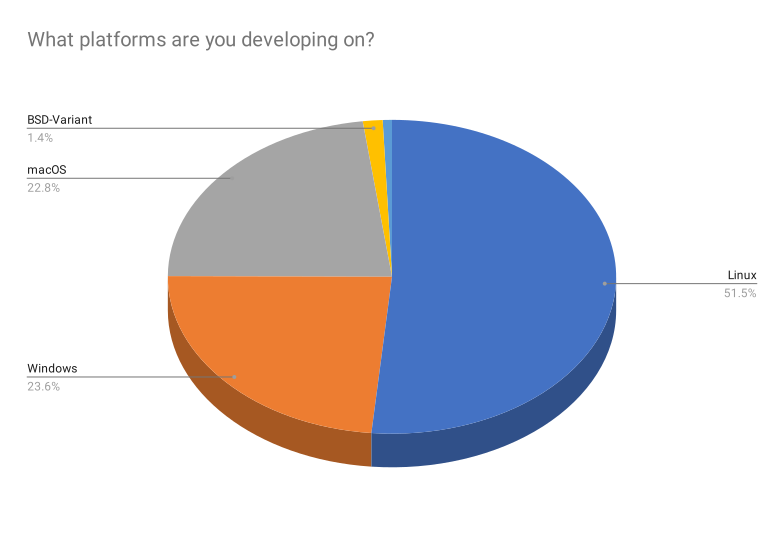
So yeah Linux was the most popular, but dropping effectively half of your users isn't always a great idea. Of course, some people will build OS-specific software in Rust, and that's great! But it is a tradeoff you're making.
I'm only saying it's a tradeoff. Obviously given Rust's origins and goals dropping desktop as a target would make no sense - it was designed explicitly for those platforms.
But if a language said "we're not going to support those" I wouldn't care at all, and a massive number of use cases - the majority, I think - would be solved with that language.
In terms of what you develop on, that's a whole other story. The majority, of course, are on Linux. But I'd be interested to know what platform they target.
> In terms of what you develop on, that's a whole other story. The majority, of course, are on Linux
I'm not sure that's as obvious as you're making it sound. The number of people who use Linux on the desktop is absolutely minuscule compared to the combined user base of Windows and MacOS. It's probably not as lopsided for developers, but I've never seen anything to imply that most developers in general are on Linux, and I'd honestly be surprised if that's the case given how much smaller the portion is in terms of people I know or have worked with, and that's as someone who does not personally own any laptop or desktop that runs anything other than Linux.
Sure, but only barely a majority. Nearly half of Rust users are on Windows or MacOS. Dropping support for those would be crazily irresponsible and would probably be a bigger programming scandal than even the Python 2->3 ordeal. And for what benefit? Making some low level libraries easier?
Yeah, obviously. It would be stupid to not support Windows in order for rust to be a healthy language. But I wouldn't care at all, and the vast majority of code - not just the code written, but in terms of it being deployed to N systems - will be Linux.


Supporting them is smart because people expect it, and not supporting it would be bad optics, but if a language legitimately only targeted Linux, and was better for it, I'd be fine with that - they target the most popular OS by far.