“Extreme steps”, whether they admit it or not, is a reduction in the standard of living of many and handicapping the efforts to improve the standard of living for most. That requires the power of the individual to be reduced to empower central authorities who will manage our new rationed, austere society.
That is, certainly, a recipe for catastrophic war.
If climate change is the existential crisis some insist it is, our only solution is technological. But those who wish to use climate change as a Trojan horse to enact their social whims will reject any discussion of the sort. Because solving climate change isn’t their goal, it’s the means to attain their goal.
> That is, certainly, a recipe for catastrophic war.
Climate change itself is probably a recipe for catastrophic war and the resurgence of fascism. There are estimates as high as 1.2 billion for people that will be displaced by climate change[1]. Even a much smaller number of refugees from the middle east and South America has helped push politics in many western countries towards isolationism and increased xenophobia. What would 1.2 billion refugees do?
There is no chance 1.2B people will migrate to Europe.
The problem is that, right now, EU countries are forced to accept poor immigrants and integration is not easy.
Integration is not easy for a number of economical reasons and not due to xenophobia. EU economies, especially in the south, are not doing well. There are not a lot of jobs, life got progressively worse in the last 20 years, crisis after crisis.
So naturally, migrants will end up working for 2€ per hour picking up tomatoes or selling drugs and stealing bikes.
Eventually, it will become politically unsustainable and local populations will vote to quit the EU and stop the immigrants flow.
The nordic countries have a rape problem linked to immigration. My grandma is afraid of walking in her own city. I'd say we're about 50% there.
We already saw it happen in the UK. The only thing keeping the other countries in is that their economy are too weak to survive on their own and they came to rely on the single market.
I'm convinced this is why so many rich folks have been buying land and citizenship in New Zealand. It's one of the nicest countries in the world that's also very hard to get to, without resources. They're preparing for the violence-tinged migration waves, by arranging to have somewhere to hide that's mostly unaffected.
That's how things work in the real world: One uses truths to sell bullshit.
NIMBYs bemoan that local school districts can't accommodate extra kids and that local roads can't support new traffic. Yes, they cite true facts to hide the reality that "they want to see their home prices accelerate".
In this case, the elite (super wealthy and their cronies in politics, think tanks) tell us that embracing refugees help humanity, learning cultures, etc, while they purchase citizenship in, properties to live in, jets to fly to, New Zealand.
These days, everyone uses truths, but see what they are hiding behind their truths!!
> There is no chance 1.2B people will migrate to Europe.
Sure, some of them will flee to Mexico or Cuba (from Central Valley and Florida); some will flee Bangladesh to India; some of the migrants that end up in Europe will be from other bits of Europe.
But I suspect quite a lot of sensible Egyptians will look at the wrong kind of water being in the Nile Delta and reach a perfectly sensible conclusion, go to an agent and ask: "أود شراء تذكرة ذهاب فقط إلى أي مكان ليس تحت الماء حاليًا." only to accidentally find themselves shortly thereafter in Zagreb taking a crash course in Croatian.
WTF? Please explain, esp. why not instead a resurgence of [communism, religion, authoritarianism, Buddhism, Hinduism, wizardism a la Harry Potter, Pokemon-ism, etc, etc.]
When I read a post containing such phrases, I am likely to suffer a severe attack of "give-a-sh*-ism" (as in "I don't give a sh* about this.")
Humans are not fish, and cannot remain in place when farmland becomes shallow salt water ocean.
Sea level rises are merely one of the things that can cause mass displacement, no matter how much other people moan about it.
I’m fairly optimistic about the future — I see this warning from the UN and think “this degree of reduction in greenhouse gas emissions is achievable in this timeframe” — but even so I’m still expecting New Orleans and a significant depth of the Italian coast from roughly San Marino to Trieste to disappear.
California has enough clean energy to desal for human consumption [1] [2]. Ag is another story, but no one needs to flee California due to water needs [3] (human consumption is ~10-20% of total use). Also, the regulation story of water for Ag in California is improving, albeit slowly [4].
[1] https://app.electricitymap.org/zone/US-CAL-CISO?wind=false&s... (Scroll to "Origin of electricity in the last 24 hours" in left nav; during daylight hours, 75%-90% of total generation are low carbon sources; and I expect that to hit 100% in the next 2-3 years based on CAISO's generator interconnect queue)
But human consumption includes Agriculture, if a country is dependant on the food it grows and there is no water, you will have a famine. If they are just cash crops that you trade for food, you will also have a famine.
All the argicultural land in california is about to become a lot less valuable. It's destruction of wealth and nature on a collosal scale. The idea that allowing climate change to continue is good for buinesss is idiotic, and could result in violence unseen since 1940's
Climate change is not good, but neither is stripping aquifers for cash crop export. California has not managed its Ag wealth very well (water, soil, similar farming inputs); low water use crops that provide high nutritional value are superior to "luxury" water intensive crops exporting California's water to other markets for the benefit of those farmers.
Same way you wouldn't want to support economic policy farming corn in the Arizona desert. Put solar panels there instead (or other crops that are low water intensity). Higher level, there is a lot of inefficiency in US Ag policy causing suboptimal outcomes. Systems get addicted to subsides or resources where costs are not properly allocated.
Human consumption includes some agriculture. You'd be surprised to learn what counts as agriculture for purposes of water in places like California. One example: Golf courses. Others; horse race tracks, horse farms, cemeteries. All kinds of places that produce ZERO crops for human consumption.
80% of California's water goes to agriculture. In a water crisis - which is pretty likely - the first step is to stop growing avocados and almonds. This should free up more than enough water to keep the urban areas going, as long as residents conserve water and don't waste it watering lawns and such.
Water isn't really fungible in that way. You could cut down every orchard in the state and that isn't going to change the water situation of places like Santa Barbara. There really is a huge amount of infrastructure and energy involved in delivering water to cities and most of it is wholly unrelated to ag water systems.
Santa Barbara probably would be fine, along with the Bay Area and some of the LA suburbs. Divert less irrigation water from the Sacramento/San Joaquin system, pump more into the California Aqueduct, central coast has water. Alternatively, pump more into Bethany Reservoir, divert to the South Bay Aqueduct, and Silicon Valley has water.
And are also the leading countries promoting cleaner alternatives to all human activites.
What you're missing is that if underdeveloped countries were even capable of reaching the same stage of development we and East Asian countries enjoy, they would contribute as much, and that is actually their goal.
No matter how you try to warp the logic or the reality of the situation and regardless of the country or culture, the responsibility of dealing with the effects of climate change (or anything else) should be proportional to the contribution that each nation makes.
Sure if any country starts to contribute more, they should also take more responsibility.
You cannot for example tax someone on the amount of money that they hypothetically can have or want to have which you even claim they are not even capable of having.
> And are also the leading countries promoting cleaner alternatives to all human activites.
So are they going to give all those away for free to poor countries? And also pay for massive programs to recapture the carbon they've already emitted? And mitigate already-locked-in effects of climate change, such as drought and extreme weather? Those are the only conditions under which your "why don't they improve their own countries" suggestion is fair.
American, Canada, Australia, Kuwait, Saudi Arabia, are a short list of countries who emit a ridiculously disproportionate amount of carbon per capita. [0]
The assumption that reduction of carbon emissions is a reduction of standard of living is flawed. A long list of developed countries have a tiny footprint per capita. Standard of living and living wastefully are not the same thing.
Your post was a good, especially as a starting point of a discussion, until you started your last two sentences ('But those ...'). Those sentences are completely counter-productive, universal, generalising accusations towards people who might actually want to discuss seriously about this topic, because they honestly share the same goal of preventing a catastrophy. It is sad that discussions are often made impossible by such unnecesary prejudice about people who you may actually want to discuss with.
If you can’t identify the interlocutors who aren’t sincere, the necessary discussion won’t go anywhere useful. And many of those discussing climate change are absolutely insincere. You see it here in these comments with “it’s the West’s fault” and “capitalism is the problem”.
It's an impressive rhetorical technique, preemptively dismissing everyone who disagrees with you as "absolutely insincere", but it seems a little obvious, especially elucidating it as clearly as you have here. You don't want to tip your hand too early... That said, it's so stupid it might just work!
A: it is an irrefutable fact that climate change is the West's fault, Climate change is caused by CO2, EU + US produced 70% of all CO2
B: Whether the people who blame capitalism are correct is irrelevant, they are sincere is that they have beef with capitalism. Accusing sincere people of insenserity is precisely the kind of thing that makes discussion unproductive
C: There is a wide range of people who insincerely advocate climate inaction, because it furhters their financial interests
>“Extreme steps”, whether they admit it or not, is a reduction in the standard of living of many and handicapping the efforts to improve the standard of living for most. And that requires the power of the individual to be reduced to empower the central authorities who will manage our new rationed, austere society.
Also forcing the industry not to put polutants in the water and air has it's cost, I would like to understand why the future generation needs to pay so our generation can keep spending money on shit like ctypto, apps, luxury.
I am assuming you think that if we just do nothing some billionaire would discover how to reverse this, but any facts to prove that in 50 years this will happen and the solution would be instant and cheap? And before someone would scream "think about the poor" I would say that there are solutions like fixing tax loopholes where bilionairse move to some different country or some giant company uses some shity loophole not to pay the taxes.
"Also forcing the industry not to put polutants in the water and air has it's cost"
it's the reverse -> allowing them to pollute and cause damage has it's cost, if a child with astma dies of air pollution, they aren't paying compensation. When someone got lead poisoning or died of black lung, companies wheren't paying for that either. If that person's family now needs support and welfare, if the pollution needs cleaning up, it's always the taxpayer picking up the tab
Yes, that was my point sorry for my bad sentence. Just wanted to explain this extremist capitalists that we already make products and services more expensive by forcing companies to respect basic human rights so it won't be a completely new thing to consider CO2 as a dangerous substance and demand companies to pay a tax or even forbid shit like bitcoin where from what I read there are better alternatives.
Edit, so from my understanding OP was selfish and thinking at his personal costs and not the costs for current children or future generations.
"Reduction in the standard of living" is really oversold by critics.
One of the most obvious impacts of a fight against climate change is that plane travel must get more expensive. Both to reduce demand and to give room for clean alternatives.
So your standard of living is reduced with fewer international vacations. But the alternative isn't "no vacations", it's "more local vacations".
> One of the most obvious impacts of a fight against climate change is that plane travel must get more expensive.
I am a staunch defender of climate action and have made many lifestyle personal decisions on that topic but this whole lifestyle 'consumer effort' message is as flawed as OP's claims. We need to look at the 'bang for buck' data.
Air travel is 1.9% of global emmissions. [0]
As a comparison:
- Energy use in Offices and Shops is 6.6% percent.
- The steel industry emits 7.2% of global emissions.
- Residential energy use is 10.9%.
- Road transport is 16.2% of global emissions.
You see where I am going with this.
Before guilting people into catching a plane for Christmas why not:
- Force steel industry into carbon scrubbing + emission mitigation R&D
- Overcharge large commercial/office areas for lighting/AC energy
- Overcharge large households using energy above a given quota per square foot
- Exponentially progressive tax on personal vehicles above 2000cc.
Notice that all of this is policy driven, not 'consumer effort'.
2% of a lot is still a lot, and keep in mind that these 2% of emissions are being emitted by a very very small group of people (relative to world population)
> Overcharge large households using energy above a given quota per square foot
That's a terrible metric, it just encourages bigger houses. Better just to make energy more expensive, and tax house size (which most countries already do)
> Exponentially progressive tax on personal vehicles above 2000cc.
Agreed but the same can be said for the steel industry, which has had zero media coverage and alone accounts for 7% of a very big number, or more dramatically 350% of the emissions associated with freight and passenger air transport combined.
My point is that there is a lot of low hanging fruit corporate emitters that should be curbed before targeting consumers.
This is a frequently-seen argument, and "extreme steps" will definitely require a change in lifestyle for many. It's worth noting though, that many of the countries doing the 'best' against climate change (e.g. the Nordics) also have famously high standards of living.
If a neighbor doesn’t get with the program (such as China or Russia, for instance), how would you suggest coercing them to the same end? And a central authority doesn’t have to be hostile to neighbors to provoke war. It may be viewed as hostile by its own subjects.
Fine. Let’s assume that’s true. The problem is still the same. How does China coerce the West to get with the program if the West refuses, for whatever reason.
Technology alone can not solve it. Our excessive consumption IS the reason we have this existential problem. We would need seven Earths worth of resources if everyone lived like North Americans.
That's based on some pretty flawed assumptions, it mixes cause and effect. We use ~all of our arable land for growing food because that's how much land we have. If we had more land, we'd use it for growing food too, to make our food cheaper. If we had less land, we'd use our land more intensively to grow the same amount of food more expensively.
For example, if we grew all of our food in greenhouses, we'd use about 0.1% of the land but food would be about 10x as expensive.
I'm not disputing the claim. I simply didn't know it. Consider me one of today's "lucky 10,000". https://xkcd.com/1053/
It is a shame this information is locked behind a paywall though. Telling people "your ecological footprint is massive" is fine, but better to understand how to reduce said footprint.
I'm guessing this calculation is taking into account production fuel costs, food production, commuting gas, etc. North America, and the US in particular, has enjoyed externalized transaction costs for a long time.
You're right I was being a bit terse as I am constantly bombarded with climate deniers and those actively trying to make things worse in my line of work.
This is a false choice. Limiting limitless consumption is not automatically reduction in the standard of living for most people.
There is a huge effect when cutting emissions of the top 10%, even a tiny bit. [1] The graph is likely hiding that if the top 10% was segmented more, it would be very hop heavy - even limiting it to the median of the top 10% should do a lot.
The US is also uniquely positioned here to cut their emissions in half and still have more emissions per capacita than Europe[1]. And no, the problem is not that the US is large and cars are required; cars are fine for rural people, but they are not fine for the spawling car-dependent suburban areas US cities keep creating. [2]
> That requires the power of the individual to be reduced to empower central authorities
Oh, you think the current order is the result of economic freedom? You don't realise that's it's a result of economic tyranny where polluters and pillagers of national wealth are protected and coddled.
We could employer individuals to claim compensation for 2 million deaths caused by air pollusion globally. We could enable farmer who's lifehood has been destroyed by climate change to claim compensation from Oil companeis and other emitters.
If your plot of land decreased in value because it no longer has access to clean water, if your house has been destroyed by a flood, if you had a heart attack from abnormally hot weather of if you used to be a toure guide to the barrier reef -> join a mile long queue for compensation from Exconn mobil and others. After all, that's the cost of doing business, right?
We could also disempower the central authority from using violence to protect private jets, pipelines, coal mines, and other climate destroying assets, and see how long they last.
> our only solution is technological
I've been hearing this argument and waiting for 30 years. Even better if you sit around waiting around for 'free market' to provide you with a magical solution. Should we wait for another 30 and see where it leads it? I mean it's easier that actually looking at yourself critically, right?
Your comment implies somehow there are governments choosing against technological solutions. There are none. In fact, they are investing billions into climate and energy technology and they have been doing so for decades. The ones that turn their back on nuclear power are most technologically inclined of all, because they are gambling on the hydrogen economy materializing and that requires a lot of new technology. And still it is not enough, and nowhere close to enough.
We are going to have to solve this problem with the technology we have. The clock has run out.
Or. We don’t. And we let those after us live with the consequences. I just worry that everyone who says “ok, let’s live with the consequences” has not chosen to properly inform themselves of what they are.
Technological progress is just a function of energy in a civilization. I highly recommend Smil's Energy and Civilization to understand this better.
The problem we are facing is directly a consequence of unsustainable energy usage, as such technology cannot be the solution.
Our quality of life will change whether we like it or not. In theory it would be preferable to choose that path. But people's in ability to accept that reality means we are choosing the hardest possible path.
We're already seeing wars over resources this very second. We will see global starvation this year from limited fertilizer production.
It's already happening and even in the comments on HN people aren't willing to entertain the necessary steps to prevent the worse case.
Given that the lower half of incomes (actually of the people behind those income numbers) in the US already have a lifestyle that is in line with the Paris 2 degree goal, we are talking about the question if the rich-ish are willing to go to war for their privilege or if we (I certainly count in the upper half here in Germany while still far from even seeing the top) find ways of maybe reducing our impact.
The biggest lever is governmental regulations. Especially enabling capitalism to make good decisions. If externalities were priced into (for example) air travel, shipping or meat, the market would find ways and massive innovation potential could be leveraged.
As long as we are able to (relatively) cheaply consume while the externalities are payed by us all in the end (or the next generations) there won't be a solution. Neither socially nor technologically. At least imho.
Well, it is true that there is an agenda, sustainable ecology cannot exist without the end of capitalism. While it is true that in it's current form, even a minimum wage worker in global north country is not sustainable, it is the rich and the super rich that have by a large margin the highest carbon footprint.
Maybe we could finally stop subsidizing cows / dairy industry.
Cows use 3/4 of our agriculture land, same amount of land as all current forests. Beef / dairy is also a leading defforestation driver. And for cheese/milk there is a lot of plant-based alternatives.
If we could afforest this land again, we would not only stop Anthropocene extinction, but we would also remove a good amount of CO2 from the atmosphere (maybe several decades worth).
Then, why stop there and not afforest steppe countries (Mongolia, Kazahstan, Sahel ...) and pay their indigenous populations not to devastate it with their herds of camels/horses/sheep ? We could easily cover large swaths of land with new forests. We could even reforest our deserts, it seems very easily and cheaply (few percents of world's gdp).
Why look at Mars, when we could start some serious geoingeneering here at Earth, with few seeds and some inovative methods (like Miyawaki, syntropic agriculture ...).
Indians in Amazon did this. They converted pretty arid land into rainforest (terra preta). Some speculate, that extinction of Indians in this region and follow-up grow of Amazonian rainforest after Spaniards came and killed them with viruses caused little ice age in 16th century.
Why not repeat it (plant new rainforests and new forests) and solve few problems with in one go. You know, we don't have only CO2 problem. Our children, or children of our children, will know tigers, giraffes and rhinos only from picture books, right after dinosaurs and mammoths (which we also ate to extinction, btw).
We don't need bilionaires to do this. No technological solution will appear in a reasonable timeframe. We need public to take their heads out of their a$$3$ and demand political changes.
Of course, this problem is very complex and needs to be attacked from multiple dimensions. But some solutions are easier than others, and people are ignorant (this post won't even reach front page), our leaders are only interested in their pockets and status quo (and so they lie and then do nothing). I'm hopeless and depressed.
Yep. Eating animals, when you add up their methane + respiration, the feed for the animals, the deforestation, and transportation, is arguably our biggest cause of climate change [1], and it's avoidable. The longest living people in the world are plant-based. So agree, it would be great if we stopped the animal subsidies and simply let the market react. As a side effect, perhaps our healthcare costs would go down. Just today I read the average american spends $1200/year on medications, largely for problems like high blood pressure and cholesterol that for many people go away when they eat more plants.
[1] I know that animal agriculture being 51% of greenhouse gases number has been questioned a lot, but from what I can tell it's closer to the truth than those who want to say it's 18% or less. Ether way, it's large. New stanford study agrees that "reducing or eliminating animal agriculture should be at the top of the list of potential climate solutions" https://news.stanford.edu/2022/02/01/new-model-explores-link....
It seems fairly obvious that we do not have the collective will to make the kind of changes necessary to meaningfully change the trajectory of climate change. Might as well spend our efforts planning on how we will live with it, as it happens. I doubt we will have any more success in the future finding the will to try geoengineering, either. We will just find millions of little ways to mitigate the pain.
As with most modern societal changes, I don't think this one is going to come down to "collective will." The massive scale of the problem limits meaningful actions to those that have a similarly massive scale of response. Only those in power can enact those.
Or if those that claim to care do not actually, or if the current design of democracy is such that it isn't up to the task of getting the right people elected, &/or passing the right legislation.
Betting so many chips on this one institution seems like not a great idea, especially since it is the one that has been driving the bus that got us to this location.
I don't see how that would necessarily be a constraint on proceeding with a design, although I would very much support that sort of functionality (and many others) being part of a sophisticated democracy platform that is more suited for the much more complex world we live in today.
For example, a political candidate could have a profile, and voters would be able to get a faster and better idea for what type of a person they really are, as opposed to the meme-war-based approach we currently have. How one would go about designing a workflow for what information does and does not get included would be a complicated but fun exercise, and perhaps the public could learn a few things about abstract thinking if the followed along as the project moved forward.
What domains are there other than politics where hardly anything materially important is upgraded over time as new capabilities and technology become available, and new problems arise? That hardly anyone seems to question (or is able/willing to even consider) whether the design of our democracy is remotely optimal suggests to me that the public has been subjected to some effective "marketing".
In Germany, one reason why there are so many delays is that the local governments allow everyone to block building renewals sources, so you have smaller European countries that already bypassed Germany in renewals adoption, while courts keep busy discussing where Windmills are allowed to be placed.
Following in the footsteps of America, I guess. We have made it extremely easy to block infrastructure improvements, even by individuals. There seems to be some idea that if we allow everyone to have a say, we can make everyone happy. Of course that doesn't work, and I'm surprised the idea gets so much traction. So we spend hundreds of millions of dollars drawing up grand plans that try to appease every possible interest group, and then give up when it is apparent that unanimous consensus will not be achieved.
Climate change is a scale, from bad to really really bad, and positive change is already happening. Here's some uplifting news in a well articulated video worth watching: https://www.youtube.com/watch?v=LxgMdjyw8uw
> Apathy is their weapon, and it's very effective.
Psychologically speaking, these tactics are approximately the same as the church's use of hell, in the sense of "fix your shit now, or else you're going to hell". This was very effective when the church held a huge amount of political sway + serious control over the media (no internet back then, people weren't even literate). It wont work nearly as well now.
Don't get me wrong--I'm no Homo Economicus fan, not saying people are fundamentally selfish--I just think people are fundamentally averse to change, to breaking their habits. The climate change leadership needs a new tactic. I'm totally in support of e.g. tax cuts and incentives for renewables, reducing carbon emissions, etc. Or other ways of raising awareness and taking action that give people what they want/need, right now, rather than being entirely concerned with an image of the future (that for many people with no families, no kids, no legacy, doesn't even exist).
I mean, I wouldn't say that we as a species lack the collective willpower to bring about broad social change. I think that it's very difficult to get that power on the ground with any traction when you have mixed messages coming from both sides of something that is always framed as a debate.
For decades, climate change was studied, warned about, and yet the way it was referred to and is still referred to by some like so: "more news regarding the debate on climate change" rather than "more news regarding climate change" — as long as it's a debate, it's undecided, you don't know if you should do something or care because the scientific community has yet to reach consensus, and government inaction is seen as a reflection of this apparent lack of consensus rather than simply governments' unwillingness to go against the grain of business and the comfortable status quo.
Even though the rhetoric surrounding climate change does seem to consider it a fact as of the last few years, you still have "experts" on both sides of the fence saying that it is and isn't real, which further enables people to put it out of their mind as something that's for other people to worry about because they're not in on it.
And for those who do accept that climate change is a reality, I wouldn't mind betting that a non-trivial subset of those people largely think it's too late to do anything urgent or drastic and are therefore content to endure some bizarre weather while society slowly transitions to eco-friendly models in the next fifty years.
It probably couldn't have gone much better, and if big bad business was truly all powerful, I doubt we would have seen any changes in society, but business has also driven the R&D of more efficient solar technology and the rapid expansion of wind power installations. I think the crowd that consider wind farms to be a blight on the landscape have mostly gone quiet after realising that J. M. W. Turner probably wouldn't have wanted to paint electricity pylons, freeways or Airbuses either, yet they're here to stay.
I'm surprised geothermal didn't take off, though I probably shouldn't be surprised given that I know practically nothing about geothermal power extraction and thus have an overly simplistic model of a magma steam engine system in my head that probably isn't at all viable or efficient.
The thing about geoengineering (at least solar radiation management) is that it's within the budget of some of the world's richest individuals in theory at least. It definitely seems like the least worst half-assed fix from my (rather limited) knowledge of the subject.
Before getting too keen on geo-engineering, take a few minutes to ponder the following paragraph from an article in Newsweek:
"Climatologists are pessimistic that political leaders will take any positive action to compensate for the climatic change, or even to allay its effects. They concede that some of the more spectacular solutions proposed, such as melting the Arctic ice cap by covering it with black soot or diverting arctic rivers, might create problems far greater than those they solve. But the scientists see few signs that government leaders anywhere are even prepared to take the simple measures of stockpiling food or of introducing the variables of climatic uncertainty into economic projections of future food supplies. The longer the planners delay, the more difficult will they find it to cope with climatic change once the results become grim reality."
If this paragraph makes no sense to you, it's because - with the exception of the proposed geo-engineering project - it sounds like something that could have been written last week. It was actually written in 1975 when climate change meant the coming ice age. Here's Spock to tell you more:
It's a good thing they didn't try to melt the arctic, right? But notice how there's absolutely no communication of any nuance, uncertainty or the possibility that the scientists were wrong. Only laments about how the "planners" were too sluggish to react to the scientist's warnings. Absolutely nothing changed except the directional temperature change of the proposed projects.
See how many Canadians complained about carbon taxes on their recent fuel costs made me realize it's basically an impossible task -- especially considering we literally experienced the consequences of our actions in record breaking heatwaves, forest fires, and flood in the last 2 years
Growth. Every government on Earth is based around growth. To question growth is taboo, in the religious sense of the word. In most modern societies, in fact, it is more acceptable to question religion than it is to question growth.
Growth is the goal of every central bank, every parliament, every authoritarian, every economic or political entity with any legitimacy.
And this religious belief in growth is looking like it is going to kill us.
It's not taboo, it's just basic antropo-ecological mechanics: if you don't focus on growth the other who will and will do more of it will outcompete you out of every niche. So selective pressure will increase the number of growth focused civilizations comparative to others.
We actually need more growth and we need to think outside of nature's and Earth's box... We have the technology to practice closed-circle-agriculture and that only needs power (more nuclear + more renewables) + raw materials (more extraction, more oil but less of it burnt as a fuel), let's just forget about maintaining the "natural balance" and put serious research work into techniques for manipulating and tweaking so called chaotic systems... There absolutely no reason why Earth can't support even a 10 trillion humans population if we just quit on "nature" (keep it just in small reservations), and go full nuclear (imagine 1+ billion reactors!) and fully embrace semi-synthetic food (sure, first iterations on sythetic proteins were carcinogenic as hell, but we know how to solve such problems now, or how to avoid them with bugs and closed-circuit-shrimps and lab-grown-meats etc.).
Yeah, a couple tens of millions might die of extra cancers and other pollution induced illnesses, but we can compensate by accelerating population growth (baby factories/camps can work if campaigns to motivate people to reproduce more don't work - though I'd guess we're good enough at the technology of brainwashing and economic incentivization by now to make masses of people do anything if we put our best efforts into....).
We just need a solid serious global responsibility frameworks instead of our anemic "globalism", so that if anyone just dumps X tons of eg. mercury in the ocean, they don't receive just sanctions but also swift targeted assassinations of all guilty parties +/- a sprinkle of tactical nukes for good measure and punishment against "pissing in the pool"...
Many share your opinion, but I think it really wrong: through "forced degrowth" we're saddling future generations with a problem in a way very analogous to pollution and wrecked climate...
And it's much much nastier problem that they won't have even the remotest chance to engineer their way out of that we really don't like to think about.
The problem of being left behind! Of being a laggard civilization/species/etc. That will manifest either in pseudo-predictable ways when humans meet other civilizations and it goes like with the conquistadors and amerindians (conquest and extermination, minor asimilation). Or it goes in an inconprehensible for us way but probably still really bad when Earth-origined-super-AGI meets X-origined-super-AGI that is more advanced than it and either canibalizes it or preemptively extincts it before even making contact, for its/their own self-preservation.
Any slow down is a silent cosmological civilizational technical debt trap in a way! At least by temporarily increasing risk of extinction by wrecking some parts of our life support systems a bit we can have the hope of whatever comes after us (I don't believe much in the future of bio-humans beyond 2-5 generations from now) has at least a fighting chance to engineer their way out of the mess we're leaving them, and at least they'd have their science well sharpened and minds battle hardened by the trials!
I don't like this way oh phrasing it, as if growth was some external religious belief that has infected us. The reality is far more depressing.
When you get down to it, what is growth? Growth means tomorrow is more comfortable than yesterday. Try getting elected telling people tomorrow won't be as easy as yesterday... much easier for voters to stick their fingers in their ears and shout "lalala"
Climate disaster coverage makes me think about how, as much as I love to think that our species will be 8B+ strong for millenia and eventually make it to the stars, that would mean that I am born among the first few percent of humanity.
It seems more likely that my random sample is from somewhere in the middle, and if an ~equal number of humans will be born after me as before, then at our population growth/levels, we don't have much time left until extinction or a population collapse from which we never recover.
I don't know that there's anything helpful in this thought, though - can I increase my odds of being born in the earliest percentile of the species by my actions?
There's some misunderstanding probability going on here.
For example, if the population stays at 8B between now and infinity, and we assume a uniform distribution of % chance you're born at any time, then it's just as equally likely that you'd be born at the beginning as at the end. There's no higher chance that you'd be born in the middle, whatsoever.
Now actually the population is likely to grow, so if anything it's much more likely that you'd be born towards the end. That begins said, some people have to be born first and of course if they thought this way, they might say things like "oh what a coincidence, this is highly unlikely" or "It's far more likely due to exponential growth that any one person exist towards the end of humanity, so therefore this must be the end", but of course, this thought could have been had by cavemen 1000's of years ago and they'd be wrong.
I think we agree - I wasn't meaning to imply that I'm surely in the middle, mostly trying to be more clear about how unlikely it is to be early. Another way to put it is to say that there's only 5% chance I'm in the first 5% of people, and 50% chance I'm in the last 50% (assuming uniform distribution, which, who knows). If I'm in the last 50%, then we don't have much time left.
And yes, if everyone has these thoughts, then about 5% of people will be wrong when they think that surely they aren't in the first 5%.
(And I'm giving you the benefit of the doubt that "between now and infinity" is hyperbole - percentiles of a uniform distribution like this don't make sense if there will truly be a countably infinite number of people. )
Humans are extremely resilient species which has already adapted to all but one or two areas in world, namely poles. Humans won't go extinct, that is just not going to happen anymore....
Now civilizations as we see them today might, but I think they entirely deserve it.
You're probably right but if we start with a large reduction in livable habitat and food production, mix in a few pandemics driven by poor health and overcrowding, and consider that a situation that stressed makes nuclear war not so unlikely, then I'm not completely confident. Particularly if we get to the more severe outcomes around five or six degrees C.
Human's have existed only for a very short while and during one of the most stable periods of climate in this history of the planet.
I understand denial is necessary to cope, but when you really understand the scale of the changes coming it's hard to image anything other than extinction happening.
All of the magic humans have done is not because of our innate abilities but because or our access to abundant energy. First in the form of solar energy harvesting through agriculture, later through fossil fuels. Unfortunately we pushed the system too far.
I too, used to think that we'd be a species that would head to the stars, but it appears that will be just one of a long line of species that cannot get past the great filter of Fermi's Paradox.
I like to think the great filter was the evolution of mitochondria - as far as we know, this only happened once in billions of years of life on our planet, and it seems to have paved the way for the complex life we have.
But more likely there are many filters, and maybe technology destroying the ecosystem we depend on is one of them.
We could have already passed the great filter. Maybe going from single celled life to multicellular life is extremely rare. It did not appear on earth for 2-3 billion years after the appearance of single celled life. The creation of single celled life could also be great filter. Good evidence of that comes about a billion years after the formation of the Earth. And then there is a species that can escape its home planet. Apart from some single celled life on rocks ejected by impacts (not going to colonize the galaxy with those rare events), that took another billion years after multicellular life evolved. But, as Elon Musk emphasizes, we should get life into the solar system now. We don't know how rare life getting to this stage is and how likely it is to regress and never recover the capability. And in any case, current theory suggests that the sun will expand in the next few hundreds of millions of years making Earth uninhabitable to current life on Earth. Not very long compared to the 4.5 billion years Earth has existed.
> And in any case, current theory suggests that the sun will expand in the next few hundreds of millions of years making Earth uninhabitable to current life on Earth.
It's the brightening, more than the expansion, that'll do it. It'll ruin the carbonate/silicate cycle in a few hundred million years, progressively forcing plants into worse and worse metabolic pathways, so reducing the total energy available to the biosphere, until finally plant life is basically wiped out. IOW, 700-900MY from now, is the end of large fauna on planet Earth, followed soon after by the end of nearly all smaller fauna, too, and all or nearly all plants. Back to single-celled and very simple multi-cellular life, until most of that's killed a few hundred million years later, too, by the loss of all surface water.
There will be little or no life left on Earth way before the sun significantly expands. Barring significant geo-engineering efforts.
I don't see why population collapse implies the end of the human race. It seems like it would be more sustainable medium term to have less people. Endangered species come back from numbers in the thousands maybe even less. I'd imagine once population levels reached anywhere near those kinds of levels there'd be a change in poplulations willingness to have children.
I'm just meaning sort of statistically - if we somehow knew only another 100B people will be born, then either we continue along our current growth and burn through 100B in a thousand years or so, or the species lasts for millenia but the total number of those people is only 100B, so the population never got huge again.
This is really just kind of an abuse of statistical thinking - you're not wrong at all that populations recover, but in our case if that happened we're back to saying that we were born in the first 5% of humanity, which I'm saying is likely not the case.
...how about focusing instead on how to live through this climate "disaster"?!
Let's be honest about it, most developed countries are making geo-strategic decisions in the context of +7 C in <= 100 years... we're just not being f honest about it! (Avoiding it is off the table, just as well as "zero covid" was off the table since month three of the f pandemic and we should've just accepted that it's gonna become endemic and most measures are waste of resources.)
Let's accept that "massive" climate change will happen, and that our goal is how to slow things down and how to avoid it being an actual disaster for HUMANITY!
(It will be a disaster for many other species that we'll go extinct as we'll probably massively increase use of herbicides and fertilizers and GMOs in order to satisfy humanity's material needs against a backdrop of populations displacements and fertile lands distribution shifts. But it doesn't have to be a disaster for humanity... ugly as it may be, it's a live-and-let-die universe and irreversible biodiversity loss will happen, but humans are quite capable of not only maintaining but also accelerating, as it's our duty to, technological and scientific progress, as long as we don't stupidly turn against each-other! We have and entire universe to infect and conquer ffs, let's just not kill each other in the next century!)
Because this is not a disaster that stops at any point in the foreseeable future. There is no other side to get "through" to.
This isn't like an Earth quake or even a nuclear war where a single event happens, the world is changed but then stasis begins to return.
Next year the impacts of climate change will be notably worse than they were the previous year. This will be true for the rest of your life. Positive feed backs and the geological history of the planet both indicate that after a (currently unknown) limit, things will start escalating rapidly and irreversibly until the surface of the planet is no longer recognizable.
The focus should be on how to psychologically begin to deal with loss at this scale. But, as anyone can see in the comments here, people are very unlikely to be ever ready to deal with the psychological stress this imposes on them. Instead we'll see subtle but steadily increasing madness consume the population. HN is a great place to observe this.
All models show that arable land will decrease in some places, but also increase in others. Net land loss due to submerging coastal areas, but also arctic areas like eg. Greenland becoming suitable for some kind of agriculture after defrosting.
And the fact "the surface of the planet is no longer recognizable" doesn't mean uninhabitable.
And "to deal with the psychological stress this imposes on them" people can also simply choose to care less, focus socially on accelerating tech development and individually stay entertained while competing in the new worldwide casinos and global-events-betting-markets etc. or playing games in the metaverses whose outcomes results in real-world-money redistributions.
> we'll see subtle but steadily increasing madness consume the population
Maybe your definition of "sanity" is a bit bit constrained and needs to be adjusted then :) To keep the optimism up, maybe future challenges will usher in an era where we finally evolve psychology and psychiatry beyond the pseudoscientifc nonsense they are today, and we replace the "war on drug" with "full access to BOTH drugs and safety information about using them" + a culture focused more on using them for freely managed performance enhancement instead of plain aimless entertainment and "feeling better".
I see a lot of future's problems as opportunities tbh... and challenging stress to force us evolve faster if we modulate it right. This is what I care about most now really, working of figuring out how to "modulate things right" to be able to squeeze the positive after effects even from clearly destructive events like wars and genocides.
One man's hell is another man's heaven I guess: I've always dreamed of finally seeing the opportunity to push the masses out of this mentality combo of christianity/islam/buddshism and other maladaptive crap that paradoxically combines well with eco-scientims or passive-observe-but-not-influence-science. (Real scientific progress was/is always engineering-driven and theories come after evidence they are derived from... the modern "use theoretic speculation to design experiments" is a dead end, all interesting experiments were designed by a desire to "engineer something" even particle accelerators emerged out of desires to build-devices-to-measure/separate/produce/concentrate some isotopes or particles etc. in the hopes that at least they'd be interesting for poisons or guns.)
Let's start engineering cool solutions (pushing reflective particles into the atmosphere to reduce warming, using modern biotech to completely extinct tropical disease vectors to keep the newly-becomed-tropical areas human friendly), then engineering solutions to the new cool problems that the first solutions generate and them on and on and on faster and faster and faster!
The "madness" is imo a (maybe rough) transition to a more fertile era of though, science and engineering...
How many GW of coal plants are being built brand new in Asia right now? It's very high. These will operate for decades.
What are we to do? Tell them to stop? Tried that unsuccessfully. I would ignore us if I were them. USA and Europe still emits tons of CO2. Has been emitting worse then them for many many decades. This carbon emitting elevated much of the wealth of the country. We are basically telling them to not become wealthy like us. They wonder why we haven't done much to reduce emissions.
We were too late, it's happening now. What do we need to do. Ignore carbon taxes that do nothing.
Instead, build renewables, build batteries, build solar panels. The remaining amount of fossil fuels is a hard limit. Staying on them is idiotic to say the least.
It's not just transportation and centralized energy production. Plastics, lubricants, wax, sulphur, ashphalt are other products of oil. What are the non-petroleum options?
We also need non-carbon emitting things like concrete.
Why do we just go to it? No regulations, no taxes, maybe even funding for any corporations who work on doing these things?
Wait nobody is doing this? The government is restricting and slowing this effort?
Actions speak louder than words, why are the world's nations saying they'll do something while their actions say they have no intention to do anything?
Is there an unspoken denial of climate change by the world?
Where have carbon taxes been enacted and in those places, have they failed to reduce consumption?
> What are we to do? Tell them to stop? Tried that unsuccessfully
Reduce our own consumption, institute carbon taxes. Tell them if they don't do the same, their imports are embargoed. Actually follow through and accept the rise in cost of goods.
>Where have carbon taxes been enacted and in those places, have they failed to reduce consumption?
Yes. Oil/Gas usage is inelastic to price. The only appreciable factor toward reducing oil has been the proliferation of hybrids and EVs and its nowhere near enough.
Before the carbon tax we had practically a 100% combined road taxes on gasoline to begin with. Tacking on only a tad bit more isn't producing any new reduction.
>Reduce our own consumption, institute carbon taxes.
How? Carbon taxes didn't work.
>Tell them if they don't do the same, their imports are embargoed. Actually follow through and accept the rise in cost of goods.
So pay more taxes for what? We are going to pay more to punish them? That doesnt sound like punishing them at all. Sounds like punishing me.
Horseshit. Here's a report from the Congressional Budget Office saying the exact opposite.[1]
"The relationship between gasoline prices and the demand for automobiles was the subject of several economic studies in the 1980s in the aftermath of the gasoline price shocks of the 1970s. Those studies found that higher gasoline prices increased the demand for smaller, more-fuel-efficient vehicles relative to larger, less-efficient vehicles. That relationship continues to hold with recent vehicle sales, according to several current economic studies."
> Carbon taxes didn't work.
Saying that over and over doesn't make it true. You haven't given any evidence to support your claims. I have.
Canada works fine as an example. BC did a carbon tax provincially and was found to be taking a beating pretty badly. Much of the claimed success of their carbon tax was that emissions did drop briefly, but only because of the financial crisis. After the financial crisis finished, everyone in Canada recovered, even the atlantic provinces more than BC. Worse yet, new homes being built in BC practically came to a halt because concrete emits so much carbon. It was adding a tremendous amount of new cost to new homes. BC never recovered from the financial crisis until about 2017.
You know the best part of following the disaster the BC carbon tax? It was John Horgan's realization. He switched virtually all his environmental points away from carbon neutral to 'cleaning up wildlife habitats' and actually doing something for climate change like becoming a low-carbon... not zero-carbon... low carbon product producer. Kind of the point of my posts. Though you'll also notice... BC is the worst polluter in all of Canada. It is their forest fires from mismanaged forests that are killing Canada... and the NDP aren't even considering doing anything about carbon emissions anymore. It's beautiful to see someone's political ideology to evolve.
Alberta and Ontario politically scrapped the carbon tax because of the disaster that it is. Federal came along an implemented one and has now even raised it. All these have been in power for years and have achieved absolutely nothing.
>Horseshit. Here's a report from the Congressional Budget Office saying the exact opposite.[1]
You may say horseshit as much as you please but oil is an inelastic commodity. There is no denying this. This is why carbon taxes are literally doing nothing.
The Carbon tax isn't even a significant increase in the taxes on gasoline. If taxing it is reducing usage, then that's already happening, the marginal increase by the carbon tax is only a small drop in the bucket compared to the rest.
That's right... these fuel taxes are regressive. If a progressive tax means mainly rich people pay taxes. The rich are who can buy EVs and will disproportionately be avoiding the taxes. Increase in price of oil/gas means the poor and even middleclass can save up less to buy an EV.
So why has this carbon tax done nothing? No plan to put solar panels on every home or buy everyone an EV? Why has literally nothing been achieved? They maxed out that tax. They dont actually receive more tax revenue to do anything with.
If your goal is to do something for climate change, carbon taxes aren't doing anything at all and clearly you think they are. That's how bad carbon taxes are for helping with climate change. People think they are doing something. If you are like me and want to do something for climate change, you vehemently oppose carbon taxes.
>Saying that over and over doesn't make it true. You haven't given any evidence to support your claims. I have.
It will be amazing the day that this breaks. It will come and we will see it the day it happens, it will coincide with an options expiration day. It will cause a major recession if not depression. This is the day that Alberta, Texas, etc become Detroit. Suddenly an elastic commodity feels the weight of tremendous taxation and will send oil prices to negatives where options and producers basically say they cant afford to produce. Then post-crash literally nobody will be there to buy. They just abruptly have to shutdown everything. Not exactly nostradamus, just explaining what has happened before.
When Alberta had their insane carbon tax it happened locally. Oil prices around the world were normal, Alberta dropped briefly below $10/barrel in 2018. Never recovered until post-election in april 2019 and first thing Jason Kenney did was obliterate the carbon tax. Literally Bill #1 passed by a true majority government whose popularity peaked because they were to eliminate the carbon tax.
It's not some gradual slow reduction in production encouraging people to swtich to EV, it's a sudden we cant afford to pay our workers. We will stop producing until oil prices recover. Yet the economy still needs fuel to be produced but none will be coming to market. Diesel semi trucks being bought today are meant to be amortized for 20+ years. We need fuel for that long, fuel will happen that long.
If an election happens soon when this breaks. Then people will just vote out the clown politicians, cancel the carbon tax. If the election isn't happening anytime soon... this will be a revolution. Not by me... i'll be driving my cybertruck.
> Plastics, lubricants, wax, sulphur, ashphalt are other products of oil
If they're produced with green energy (i.e. oil is only used as a chemical input instead of an energy input), then they aren't adding carbon to the atmosphere. Continue using them in good health.
It does feel, unfortunately, that in the question of "Now or never?", that as a species we've decided on "never". Or at least "Not until something acute and surprising happens to a western country."
superstorm Sandy.. Western wildfire.. Pacific kelp forest die-off? this is a political situation, as some people are deeply affected while others see nothing important or local economic change only
CaspianReport has a good video on why it's hard to make the transition to renewables. Renewables are already being built at an exponential rate, but we're starting from a low starting point. Since we can't get off of coal and oil and go straight to renewables, we're moving to LNG as the transition fuel. LNG, though, is very expensive.
We're still at a stage right now though, where solar panels and wind turbines are the cheapest form of energy by a wide, wide margin and every MWh of electricity they generate is almost guaranteed to be MWh natural gas that doesn't get burned.
When natural gas regularly goes below 5-8% of grid production then we should probably shift focus to intermittency and storage but for now trying to solve the intermittency problem at the expense of generating less energy overall simply means more natural gas will get burned overall.
I've listened to a podcast recently [0] that describes climate change as a definite problem, but not the civilization killer it is described as.
Frankly, I don't know enough about this to evaluate the problem critically. Some of the points that were made, that I thought were interesting:
- climate kills very few people currently.
- way more people die in "cold waves" than "heat waves".
- we spend way more money on heating now, rather than cooling. This will have to change obviously.
- hotter climate will encourage food production.
- a economic analysis (need to find the reference) was done projecting climate change impact and apparently, it's minuscule. On the order of 5% by 2100. Global wealth is projected to increase by over 300% during this time.
- so called "developing nations" have no money to move to alternative energy sources.
Some things that were not addressed, that I'm specifically curious about, living in a coastal area, is sea level rise.
I must admit that part of the reason I found this podcast so compelling is that the interview implies that while it's a real problem that has to be addressed, it's not, like I said a civilization killer.
OK, we've got hundreds of scientists from 65 countries who spent years compiling a rigorous 2900 page report on one side, and on the other, a podcast.
If you are genuinely seeking the data and arguments on the issues, please at least read the executive and technical summaries of the report, here: https://www.ipcc.ch/report/ar6/wg3/
I don't think there's any argument about data; but certainly the interpretation. Thanks for the link, I'll try to make my way through the "policy maker" one.
The reason I made the post was to get some critical feedback on the podcast. I'm curious, how much of the report have you read yourself?
> I'm curious, how much of the report have you read yourself?
I have not read this one yet, but I make a point of trying to read the summaries of IPCC reports before getting into arguments about it. They are impressive documents, even though written by giant committee.
> - hotter climate will encourage food production.
"By the 2040s, the probability of a 10 per cent yield loss, or greater, within the top four maize producing countries (the US, China, Brazil and Argentina) rises to between 40 and 70 per cent. These countries currently account for 87 per cent of the world’s maize exports. The probability of a synchronous, greater than 10 per cent crop failure across all four countries during the 2040s is just less than 50 per cent."
> - a economic analysis (need to find the reference) was done projecting climate change impact and apparently, it's minuscule. On the order of 5% by 2100. Global wealth is projected to increase by over 300% during this time.
"By mid-century, the world stands to lose around 10% of total economic value from climate change. That is a real scenario if temperature increases stay on the current trajectory, and both the Paris Agreement and 2050 net-zero emissions targets are not met, according to new Swiss Re Institute research."
> - so called "developing nations" have no money to move to alternative energy sources.
The so-called developed nations can help with that transition, though. Many so-called developing nations have plenty of sun available to them, for example.
I found the GDP impact paper referred to in the podcast:
> While climate scientists warn that climate change could be catastrophic, economists such as 2018 Nobel prize winner William Nordhaus assert that it will be nowhere near as damaging. In a 2018 paper published after he was awarded the prize, Nordhaus claimed that 3°C of warming would reduce global GDP by just 2.1%, compared to what it would be in the total absence of climate change. Even a 6°C increase in global temperature, he claimed, would reduce GDP by just 8.5%.
Did you know the UN also warned in 2005 that man-made global warming would so decimate coastal areas as well as the Caribbean and Pacific islands that there would be upwards of 50 million “climate refugees by 2010.”
UNHCR says there were 42.4 million people displaced due to climate-linked disasters in 2010, so this prediction was not far off. What you should be asking yourself is why you had this contrarian tidbit at your fingertips, but you're not aware of the primary facts.
Moving people away from disaster zones and making infrastructure more resilient would be far more realistic, not to mention cheaper, than reducing emissions or pulling CO2 from the atmosphere.
It's too late to stop using fossil fuels. It's a forbidden fruit that has pulled hundreds of millions out of poverty and the third world countries want first world lifestyles. We are better off trying to mitigate.
The fact that we have cognitive blinders that tends to try to go between two extremes in the middle, even when one of the extremes ("extreme steps needed to avert climate disaster") is correct and the other is incorrect ("we can't stop using fossil fuel and we should just move people from disaster zones") is incorrect.
You are not taking into account the scale and width of the impact of climate change, the effort to implement what you've described, and the breakdown in society that it will cause (along with second order effects).
In the early parts of covid there was almost a breakdown in civil order because of a lack of toilet paper. When that is people dying in heatwaves, mass migration, and starvation it will not be possible to handle it in a methodical fashion.
We can stop using fossil fuels. Electric and renewable can work to replace all our needs, and we can modify our lifestyles otherwise. It isn't great but it is the best alternative.
>We can stop using fossil fuels. Electric and renewable can work to replace all our needs, and we can modify our lifestyles otherwise. It isn't great but it is the best alternative.
That's such a ridiculous statement in face of recent events - Europe can't even replace fossil fuels imported from Russia in years from now with the insane political will behind such a move - and this is some of the richest countries in the world with very left leaning/pro green energy governments. This isn't replacing fossil fuels - it's replacing one source of fuels used with another.
There's no call for being insulting. Force majeure supply interruptions (particularly those served by durable infrastructure, like pipelines) are different from rapid but planned shifts. The cutoff of Russian gas to the European market is not very comparable. And really, there is no negotiation or bargaining with the catastrophic climate outcome - it is has no regard to how difficult it will be to move off of fossil fuels.
If you want to connect this to European situation, you can see that one nation depends on fossil fuels to maintain geopolitical relevance, and you may look at political parties allied and supported by that nation and the energy policies they support.
Since it's extistential for Russia (and US/Saudi petrochemical concerns) to keep people on fossil fuels, they undermine moves off it it. They flood global anti-environment movement with money and delay and obstruct fixing this, and make people believe it is less possible that it is. They are completely ambivalent to what will probably be the death of a majority of the world's population under worst case scenarios before the ended of this century (https://report.ipcc.ch/ar6wg3/pdf/IPCC_AR6_WGIII_SummaryForP...), which is currently the most likely outcome.
Anyway, we have change our ways, or doom our children. That's the choice ahead.
I think we are already doing that, albeit in typical human style of waiting for a local disaster before moving people completely out of the danger zone.
The danger zones are huge, and understandably people,ant to keep using them until the last possible moment. Like all projections show Manhattan may one day be under water, but we will only slowly abandon it as it floods rather than evacuating dry land in advance.
Manhattan has been under threat of flooding for centuries yet we have figured out ways to prevent it. Same for Holland, Venice, etc. Hell as I pointed out above the Obama's just built a luxury mansion right on the beach in Marthas Vineyard. I guess they are utterly ignorant of the climate change threats, eh?
Much of the climate change hysteria is only viable if you assume that human ingenuity and innovation will utterly cease for some reason.
Not a very smart bet. Instead it's far more likely much of the climate change hysteria is merely a way to exert control that governments wouldn't otherwise have. For example, this article didn't even mention China or India once. If you are going to screech about carbon and not even mention the two biggest producers of atmospheric carbon then it's not a serious discussion - at all.
> For example, this article didn't even mention China or India once. If you are going to screech about carbon and not even mention the two biggest producers of atmospheric carbon then it's not a serious discussion - at all.
Let's talk about China and India. These are the only ways they can keep their carbon emissions from going up:
1. China and India stop economic growth, remain poor - Easy for us in the West to say as we live in large houses, drive SUVs to the Starbucks drivethru. Difficult for them to accept because they're just trying to get enough food, clean water, and medical care.
2. Invent clean technologies that can replace fossil fuels 100% in every application. Rich countries pay the full cost (maybe adjusted for India and China's historic emissions contributions) for immediate rollout in every developing country.
3. Do neither and wait for the inevitable riots and wars to break out.
Hopefully you meant a tax on carbon emissions, not a tax on energy use. One of the few tools we have out of this mess is a tremendous expenditure of energy to remove carbon from the atmosphere and ocean.
Waiting until there are consequences (in general) instead of merely the prediction of consequences (reactive instead of proactive) has two effects:
1) Delaying costs and potentially setting off consequences that cannot be avoided.
2) Not being taken in by those who use scare tactics to control you based upon consequences that might not happen.
Is this a matter of deferred gratification and societal-level self control, or of epistemology and institutional trust?
IMHO, those who spent the last several decades opposing nuclear power have as much blood on their hands as those who denied climate change was happening at all.
I don't think so. People like John Kerry - that so-called 'Climate Czar' [1] who keeps on dashing around the world in his private jet to tell the world they should be ashamed about their holiday travel plans - won't reduce their standard of living. People like Jeff Bezos won't, not will Gates, nor will just about anyone who wears a nice tailored suit while banging the climate drum. They won't because they need to fly to those important meetings at nice resorts where they discuss how other people need to reduce their 'climate footprint'. They are important people.
This whole disaster scenario is nothing new, it is not the first nor will it be the last. Whether it is a boiled earth scare, a frozen earth scare, a nuclear winter scare, a poisoned planet scare, a dried-out planet scare, a too-many-mouths-to-feed scare, a peak-oil scare or - to go bit further back in time - a heathen scare, a Catholic/Protestant/unbeliever scare or (even further back in time) a barbarians-at-the-gate scare, imminent disasters have always been a good way to try to get the populace to bend to some rulers will.
Me, I'll gladly ignore this just like I ignored all the other scares. I'll concentrate on independence just like I've been doing since more or less forever. That we happen to lower our ecological footprint doing this is just a nice side benefit but it is not driving. What is driving is that want to cut as many strings - which all too often end up acting like stings, not strings - between those rulers and our family as possible. This means energy independence (nearly there, waiting for remaining materials to be able to go off-grid when needed), food (getting there but with a whole forest full of moose, deer and boar we'll manage if needs be) and water (we have a reliable well which can give water without the need for an electric pump) independence, etc. I only use older hardware for computing which I can repair when needed - this is how I acquire it in the first place, dumpster-diving to save the planet. We have enough bicycles and spare parts to move an orphanage, a few old tractors including a two-wheel diesel-powered Irus which is older than I am, a bunch of horses plus the land and (horse-drawn) equipment to feed them and us, etc. The harder they pull those strings, the more of them I intend to cut.
[1] how long will it take for some do-gooder to suggest an alternative for that Russian word, Czar?
Do you think there are other options? Doing nothing in the face of a climate catastrophe will ... what, keep up or improve everyone's standard of living?
My point was only that it's a form of religious faith to think that our current form of international corporatism is the only way to generate wealth in the future. I don't even think it's doing a particularly good job of that now.
Who said anything about it being the only way? It is still the best demonstrated way to provide the most opportunity the most amount of people that has ever existed throughout humanity and you still don't have a viable alternative other than a sarcastic reply.
Uhhh, yes it does! What's the point of profits if your private island/beach resort is under water? Where will profits come from if civilization ends?
Any intelligent capitalist sees the climate and other systemic issues as strategic risks/opportunities. Don't look at (late coal baron) Robert Murray and think that is all capitalism is just because he is part of it.
And here it is: 'wealthy nations will need to contribute financial aid to low-income countries, to address inequities in vulnerability to climate change and to accelerate the clean-energy transition in a way that benefits all'
In other words, TPTB employing as a facade the big global institutions under their control to sprinkle some fake respectability on their plan to enforce drastically reduced living standards on the middle classes, as part of their simulacrum of global communism that will enable the ultra-rich to maintain their hegemony in perpetuity, whilst reducing all others to cattle in their technocratic global slave system. Quelle suprise
That's... a lot of fancy words to say "These greedy rich people are trying to take the middle class's money again to make us into slaves".
And that's just inane. Like, yeah, rich people are greedy, yeah, systemic problems exist, yeah, economic inequality is bad and the influence of the super-rich is a problem.
But I don't see how you can go from any of that to "therefore, richer countries shouldn't give aid to poorer countries because that's a trick of the super-rich to make us all into slaves".
If nothing else, helping poor countries worldwide develop reduces the power of the super-rich over society, since it means they have fewer super-poor exploited populations to draw from and need to make more concessions to workers instead of just relocating to some poorer place.
It's so easy to see it when you take a few steps back and look at the constant fear the media's been pushing for almost 30-40 years now - every once in a while there's an article about how "_this_ time it's an emergency!"
I swear science is turning more and more corrupted into a substitute for religion for people. We don't have religious faith anymore to guide us and give us comfort, so we're relying on the "experts" that the "higher powers" tell us to listen to. Can't believe in the man in the sky, but we'll believe what the people the media told us were experts have to say!
You sound like someone saying "Ever since I've jumped off that 40-stories building, so-called experts have been telling me I would die. Well I've fallen 30 stories so far and I'm perfectly fine, these experts are morons".
As for the whole science-as-the-new-religion thing, well, that's just a cheap shot. You're just seeing a lot of people disagreeing with you and going "oh, these people are obviously all brainwashed by the new dominant cult and that's why they're so stupid".
Maybe I should re-word my original statement - Science has most definitely turned into (or is very similar to) faith-based followings/religions. I'm going to speak from a mostly western, north american viewpoint of the world.
Would you not say that there's many many people that don't truly understand the intricacies of what science is and what it's become, but still follow it without asking questions?
Academically, I would assume that for the majority of people, science was something you were taught to blindly trust growing up, being told that scientists have your best interests in mind while they spend time finding out everything about the world and coming up with reasons/theories for the way the world works and interacts with itself. The world wouldn't be anything without science, they say.
Religion is based on a set of beliefs, followings, teachings, determined and taught/shared by "qualified" individuals like priests/pastors - followers were raised from a young age to follow, internalize, and spread their faith.
When you go to church (catholic in this example), you're asked/silently obligated to donate to the church when the collection plate is passed around. You're giving money, and debatably power (in form of money) to the church to keep spreading their beliefs.
I think it would be foolish to assume that there weren't rich kings/countries hundred of years ago giving money to the church to influence certain activities/actions through religious decree/law.
Today, we have numerous examples of corporations lobbying governmental and scientific institutions to push whatever is the cause de jour. There was corn syrup lobbying in the 2010's and who knows how far back, you had the food pyramid in the 90's that heavily promoted food groups that the USDA itself was subsidizing.
There's so many outside influences, blind faith/trust, etc. etc. that I feel comfortable in todays day and age saying that society in general "trusts" science like they would "trust" a religion to keep them safe and alive, and healthy.
Well... yeah! The magical word is "carbon tax" and economists have been screaming it into the skies for at least the last decade. Nobody wants to hear it, though.
It’d likely cause a lot of inflation on manufactured goods, but it’d make manufacturing here a lot more competitive, and greatly increase the leverage of blue collar workers in developed countries, which should reduce income inequality within the country - it would make the rich poorer, but the poor potentially also richer in real terms.
It’s the only way I see of realistically tackling climate change.
We get at least a couple of these reports in the news every month. I can’t help but believe it’s to create fear. The general public by and large cannot solve this crisis - it’s down to politicians to regulate and innovators to create and push new solutions and alternatives.
Politicians are not going to go out of their way to hurt industry unless the public are rabidly screaming for it. These reports are for the public to generate that push.
I think cause and effect is mixed up here. I think the damage humans are causing to our planet is scary. Fear is just the emotion we feel when something scary is happening.
It sounds like you're saying creating fear is a bad thing. Is it?
Sure, people don't need or want to live their lives in fear. But, can you think of a time you changed your behaviour on account of something you were afraid of?
it's mind-blowing that people like you accept the idea that it's perfectly normal and fine for unelected members of international pseudo-government bodies to spread fear porn propaganda specifically in order to get citizens to enact change in their lives, And That's A Good Thing™. how the fuck did we get to the point where top-down emotional terrorism of the working class is lauded as some kind of grand achievement for furthering human civilization? insane
I hear your attempt at divisiveness here ("people like you"), but I suspect we're not so different.
Nobody in this conversation is enacting "top-down emotional terrorism" –– not me, nor the IPCC –– nor is anyone claiming that's a good idea. In fact, that would be a very bad idea. (If there's one way to get folks to do literally nothing it's to paralyse them in fear.)
If you read the report, you'll see concrete recommendations that are to be enacted at the governmental level, rooted in the reality of a changing environment. The consequences of failure are intentionally stark -- we made them ourselves.
You're falling for the individualism trap. Climate change isn't your problem, nor is it my problem. It's everyone's problem.
Everyone's problems are solved by high-functioning institutions. Motivating action to avoid consequences at society-scale is a great way to get institutional gears moving.
What you say might be true if this was politically motivated. But scientists generally aren’t, and they’re generally scared of what their data is saying.
ah right—scientists. I forgot that one cannot question the motives of the contemporary clerical class, as they are always pure of heart and mind and uniquely the sole exception to the "everything is political" nature of modern times. apologies for the heresy!
Come on. I'm really not a dogmatic "church of science" kind of person out there trying to burn the antivaxxer heretics or whatever, extremely far from it. Scientists are obviously fallible, it's the whole reason we have the scientific method. But I know a good number of scientists, and generally they're really the type of person that's interested in just figuring things out. And with those people in mind, I'm pretty sure this is not angling for anything except that we need to get on the fucking ball and decarbonize asap, because humans + resource shortage = conflict, and this is that taken to an extreme.
I am oddly in agreement with you. It is not the same, but nuclear weapons suffer from the same issue. Things are way worse than only 30 years ago ( more countries have access now; there is at least one more country likely to add that capacity in a year or two ). In a very practical sense, things got much worse from doomsday clock perspective. But each time this fear is invoked and nothing happens, people get 'used' to the idea.
I think more countries getting nukes is a good thing. It clearly prevents aggression by the evil imperialist countries. So I really think every country should have them and capability to deliver them to anywhere on the globe. For peace and prosperity against those who want topple their governments be they autocratic or democratic...
Consider Ronald Raegan's 1987 speech to the UN, famous for its mention of an alien threat. I'm convinced the UN really took it to heart that they need to invent a common enemy to unite the world toward countering an existential threat rather than fighting each other.
> “Cannot swords be turned to plowshares? Can we and all nations not live in peace? In our obsession with antagonisms of the moment, we often forget how much unites all the members of humanity,”
> “Perhaps we need some outside, universal threat to make us recognize this common bond,"
> “I occasionally think how quickly our differences worldwide would vanish if we were facing an alien threat from outside this world. And yet, I ask you, is not an alien force already among us? What could be more alien to the universal aspirations of our peoples than war and the threat of war?”
Personally I don't think the anxiety and mental breaks I've seen in my millenial and gen-z peers from the whole "11 years left to do something" is really worth it, what good is world peace if our lives are defined by guilt and hopelessness.
>> Personally I don't think the anxiety and mental breaks I've seen in my millenial and gen-z peers from the whole "11 years left to do something" is really worth it
This is what gets me. Children having “climate anxiety” is messed up. There is nothing they can do to fix it and they shouldn’t have to worry about it. The constant repeating news cycle of climate fear is clearly targeted at them.
Tackling it involves lowering our standard of living. To have any hope of pulling that off politically, we need to care more about it than we do about our massive SUVs and our car-centric suburban lifestyles.
>> Tackling it involves lowering our standard of living.
Never happening. Young people are already facing a lower standard of living the previous generation. If you think they’re going to accept an even greater decline you’re not going to win. We need to get the current technological solutions (e.g. clean energy solutions) down to roughly the same cost as fossil fuels, and we need new technological solutions in areas where we can’t solve emissions without a reduction in standard of living.
They had the same kind of messages reguariding famines and over-population back in the 1970s, we’ve been mostly fine, with the last (non-war induced) famine happening in 1990s Ethiopia (if I’m not mistaken).
But of course that these type of institutions have learned that focusing on the good things in life doesn’t attract any funds, so here we are.
Also importantly, solutions don't magically appear. Someone needs to do the work and before even that happens, the problems need to be identified and studying.
I get your general point about money providing perverse incentives, but I've got to say this is a strange take.
The U.N. Intergovernmental Panel on Climate Change (IPCC) is "is the United Nations body for assessing the science related to climate change." [0]
Would you prefer that this type of institution "focus on the good things?" Instead of doing their job?
Perhaps a stretch, but it sounds to me like you're saying hospitals should tell you about how good your cholesterol levels are instead of mending your broken arm.
I don’t know what country you are in but at least in the UK politicians are acknowledging the existence of a problem and this mirrors the scientific evidence.
This has changed over the last decade or so, previously the same party was banning onshore wind farms and removing legislation on lower energy house building.
This mirrors the public sentiment, climate change denial is a minority opinion here now.
What the politicians won’t admit though is that we can’t solve this problem without changes to our lifestyle. Even the Green Party won’t publicly acknowledge this.
That's a very childish attitude. "daddy doesn't brush his teeth so why should I?"
What is there to "believe"? No belief is necessary here. It's a cold scientific fact that if we don't drastically reduce the amount of Co2 we emit, the coming decades will be pretty horrible for billions of people.
Also former world leaders building multi-million dollar mansions right on the coast (that are supposedly flooding at any moment if we don't tHiNk Of tHe ChIlDrEn!)
You can increase food productuon in a variety of ways, and food production responds to market incentives.
But the amount of CO2 in the atmosphere and oceans is a math problem and doesn’t respond to market incentives: it is pure externality.
You could be right but it’s worth thinking about the shape of problems. Crucially, we’re already seeing the effects of global warming, including positive feedback loops.
Genuine curiosity. What are you concerns about “solving” climate change? Like if the IPCC reports are all wrong, and all we end up with is renewable energy where do you anticipate the cost to shift?
Isn't it the case that the global temperatures are stubbornly refusing to match the (increasingly bonkers) rhetoric? Perhaps that's the reason for warmists digging their heels in even further, censoring dissent etc.
> Isn't it the case that the global temperatures are stubbornly refusing to match the (increasingly bonkers) rhetoric
Correct, they are in fact worse than most calculations, in terms of absolute values and acceleration. It turns out that we are not being pessimistic and scared enough.
That was the case 10 years ago, but since then they have discovered that all the temperature records since 1950 were wrong, and they have been correcting them. Turns out the computer simulations were correct all along and it was the data that was wrong.
This guy has been digging up old NASA publications showing what they claimed, in 2000, that the temperature was between 1950-2000 and what they claim today that the temperature was between 1950-2000.
Pretty easy. A lot of the things asserted as facts in this video are actually just lies. So it doesn't add up.
One of the most indefatigable climate anti-contrarians is Andrew Dessler, climate scientist of Texas A&M University. You could read his book, or just his Twitter.
OK, so if it is that easy, show us where Heller is wrong instead of mentioning someone else who wrote a book. Heller's videos offer many individual facts which could - or could not, depending on who is right - be refuted by pointing at the correct [1] data. One of Heller's main claims which he keeps on coming back to is that it was a lot warmer in the '30s than it is now. This seems to be corroborated by the list of temperature extremes for the USA [2]. This point alone gives credence to Heller's accusation of climate alarmists making use of tailored views on climate data by only showing historical data which shows an upwards trend, hiding the fact that those data show a local maximum. Given that Heller has been at this for a long time I would expect someone to have taken his statements to task by showing where he is wrong. I have yet to come across a refutation like that but I've seen plenty of supposed refutations in the style of the one above using vague assertions of 'lies' and 'it does not add up'.
Show us, where is Heller lying and what does not add up? If you can point at someone who actually refutes Heller's claims that would suffice as well but make sure to point at the actual correct [1] data-backed refutation, don't just say someone wrote a book. Until such a time I will believe my own observations based on historical data which do not seem to indicate a climate 'emergency' but which do show climate change, no matter which part of history is studied.
[1] where 'correct' stands for 'actual', not 'corrected to fit a narrative'
Your position is seriously that climate change chan't be all that serious because it was hot in the Dust Bowl? I feel that you may be beyond help on this topic.
Instead of cherry-picking that particular fact, I suggest you direct your temperature extreme studies to the world generally instead of just the continental U.S.
I notice that you did not answer my questions, instead going for an ad-hominem. This is not a sign of the strength of your ideological position, it is the type of reaction which can be expected when confronting religious dogma.
Instead of cherry-picking that single example I gave you could try to actually refute Heller's - and Schellenbergers's, and Lomborg's and many other's - position on the 'climate apocalypse'. Realise that the more ad-hominems you throw, the less chance you have of convincing sceptics of your position.
I guess the primary issue with the video is the focus on US data (which is less alarming) rather than global data. Also for the forest fire data, after the large burn of the early 1900s, there would be a reduction forest debris to act as fuel so you would anticipate smaller fires for at least a few hundred years.
Thanks for the XKCD reminder. I have used this in the past as a nice way to illustrate the cause for alarm.


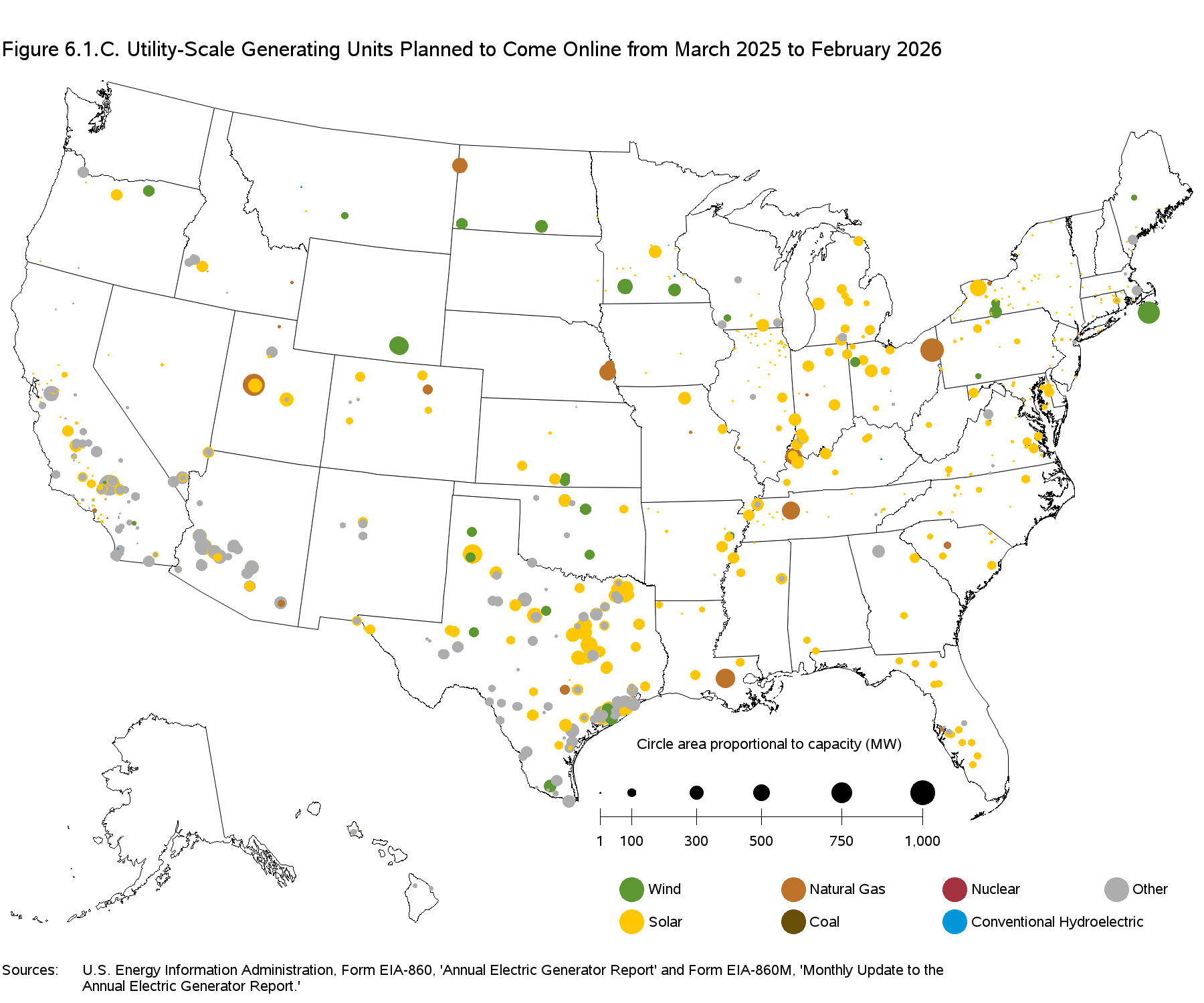

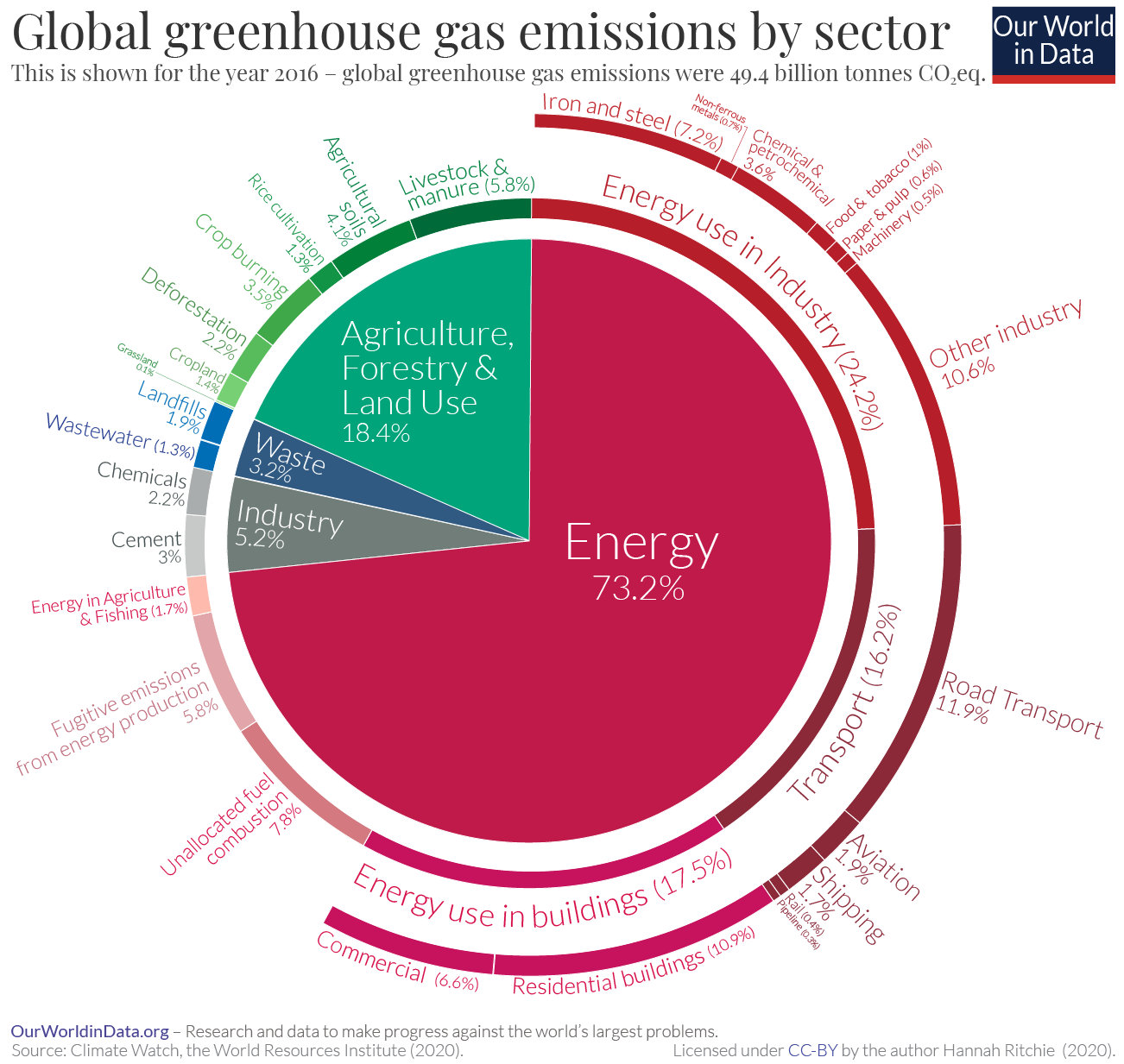


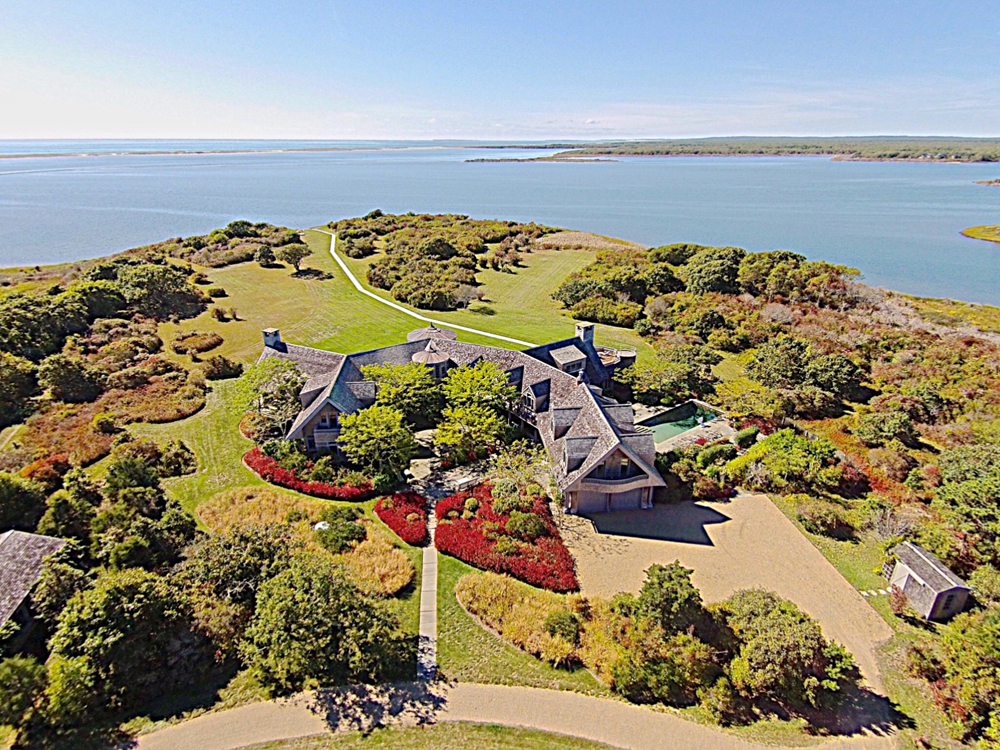
That is, certainly, a recipe for catastrophic war.
If climate change is the existential crisis some insist it is, our only solution is technological. But those who wish to use climate change as a Trojan horse to enact their social whims will reject any discussion of the sort. Because solving climate change isn’t their goal, it’s the means to attain their goal.