I wouldn't buy another Apple product either. Between a MacBook Pro which caught fire, an AirPort which melted, an iMac which the backlight went on and a MacBook which had to go back 4 times (!) due to logic board problems, it scares the shit out of me parting with that sort of cash and actually depending on it. The muppets at the "genius bar" (retard shelf as we call it now) aren't exactly helpful and usher you away so other people don't hear about it as well.
I now buy OLD Lenovo machines (T61 series) and chuck Debian on them. I buy two at a time and stick a (Samsung) SSD in them for less than half the cost of an MBP. One lives in the cupboard as a backup. I have a few spare batteries (9-cell and Ultrabay) sitting around as well.
Also, I find it objectionable purchasing anything that doesn't have a way of isolating the power either i.e. removing the battery. One short on a LiPoly pack and your tech gadget turns neatly into an incendiary device, which is what happened to my 2010 MBP. It nearly burned my house down.
I genuinely don't get all these people who think they are soundly engineered. They are expensive trinkets with no engineering applied past appearance.
Although you might have requirements that aren't met by Apple's products, such as wanting a removable battery, to call them "expensive trinkets" with "no engineering" is absurd.
Apple's work on the unibody case is but one example of how they're pushing manufacturing technology as far as it can go today. Other vendors are content to stamp out the same old plastic clamshell, to fit in the same old motherboard and optical drive, whatever's cheapest and quickest.
With the exception of Sony and HP, few companies even try to do what Apple's doing.
Last time I've disassembled a Lenovo laptop it still had the entire thin aluminum shield thingie inside, y'know. And desktops are made of metal instead of wood and rich corinthian leather for (a bunch of) reason(s). On the other hand, my experiences with Lenovo T-series were mostly of the "flimsy pieces of crap that only look solid" category (but maybe I was just less than lucky).
Aggregated studies of customer satisfaction seem to still be so much better for Apple than for other manufacturers, that it's a bit hard to blame it all on confirmation bias.
Have you ever done the "flex test" with an MBA and a T61? Very noticeable different with a magnesium rollcage vs. an aluminum unibody. There is no flex in a T61.
Lenovo's relatively low score is because they shift out lots of low quality consumer grade laptops (g-series) which are to be honest, just junk but earn them a lot of money. They don't even assemble them themselves. If you took just ThinkPad series machines, there would be a very different result.
I said it looks solid, I had a T-series laptop, and I replaced it with an MBP, so I know a bit about their respective constructions. The cage and everything didn't help the T being in worse shape (loose hinges, cracks in plastic, failed display close sensor) in half the time I've used the MBP (which is still going strong). So yeah, my personal case was very different.
And as for the flex test mentioned just above, it's not really an interesting test. It doesn't matter if anything flexes, it matters whether and when it breaks, and that's a test I'm not going to make. This is what I mean by making a product look solid, not be solid.
FWIW, I tend to carry two different MBPs from different ages holding them by the display regularly, and they're still alive and well after, respectively, years and months of abuse. And the first thing I did after buying the first one was dropping it off the table, which is twice the height that killed the T completely (after it wasting its battery completely after a year, that is, another feat that MBP didn't replicate).
Also, what the sibling said: stop acting like a child. Thank you.
Sadly, Lenovo cannot be relied on as they once were (even for the first few years post-IBM). My W520 has been to warranty depot three times - still not fixed - for this problem that has been known for 1.5 years:
Just as it has always been, the T series will be the best built laptops. You were free to purchase a T530 with any of the i5 or i7 CPUs and 1920 x 1080 screen. The only downside to them is the lack of higher end GPUs. They are just about as solidly built as the older T series.
I bought it specifically for the quadro 2000, for volume-rendering and cuda. Thanks for the heads-up, I didn't realize the W series was created post-IBM.
You're essentially saying that any computer with a metal case, or extensive metal shielding inside could suffer the same problem. HP makes a number of metal laptops, for instance, in an effort to make them more recyclable, the same reasoning behind Apple's materials decision.
Why would I buy a Lenovo T-series? It looks virtually indistinguishable from any laptop made in the late 1990s and still has that absurd red joystick. I hope they've improved the trackpad because those were nearly unusable before.
I know there's Lenovo fans, ThinkPad fanatics, but they look like junk and feel even crappier. The new Dell Ubuntu laptop is the only thing I can think of as a reasonable alternative to what Apple's doing.
> Why would I buy a Lenovo T-series? It looks virtually indistinguishable from any laptop made in the late 1990s and still has that absurd red joystick.
And with that statement you just exposed how ignorant you really are. The TrackPoint is far superior to any trackpad out there. In fact, I don't even use a mouse with my desktop - I have a USB version of the ThinkPad keyboard[0]. With the TrackPoint, you can use the mouse without ever moving your hand from the home position on the keyboard. It's more efficient than a mouse, and much, much more efficient than a trackpad.
And instead of the stupid "two-finger scrolling" you see on Macs these days, you can hold the middle mouse button and push up or down with the TrackPoint to scroll infinitely.
And the reason why the ThinkPad design has stayed the same since the 90s is because ThinkPad users aren't chasing after the latest shiny bauble - they want a device on which they can get their work done. The ThinkPad design is timeless in that it gets out of your way so that you can focus on what is important.
Apple has to make sure they regularly have shiny new product designs to keep their customer base happy because their customers are more interested in looks than functionality.
> I know there's Lenovo fans, ThinkPad fanatics, but they look like junk and feel even crappier.
You really need to stop drinking the Apple Kool-aid and realize that there are far superior laptops to the MacBooks.
You come across as an Apple hater here. You're not making objective arguments or even providing personal anecdotes. You're just pushing your personal opinion as fact.
> And with that statement you just exposed how ignorant you really are. The TrackPoint is far superior to any trackpad out there.
When you call someone ignorant, you should typically follow up with a factual statement and not just your personal opinion. In my experience, the TrackPoint is tedious and awkward. Good for you if you like it, but everyone else in the world isn't "ignorant" for having a different opinion.
> It's more efficient than a mouse, and much, much more efficient than a trackpad.
Not in my experience, but a bigger issue is that the TrackPoint is abstracted further, which makes it less intuitive. If touching something on the screen directly is a first-level abstraction, introducing a mouse or trackpad is a second-level abstraction, because your motions are moving a proxy (the cursor) around on screen. The TrackPoint is a third-level abstraction, because you're using a joystick to move the proxy, so your motions are no longer paralleled on the screen (i.e. the cursor moves but you didn't actually move the TrackPoint).
> And the reason why the ThinkPad design has stayed the same since the 90s is because ThinkPad users aren't chasing after the latest shiny bauble - they want a device on which they can get their work done. The ThinkPad design is timeless in that it gets out of your way so that you can focus on what is important.
Apple has to make sure they regularly have shiny new product designs to keep their customer base happy because their customers are more interested in looks than functionality.
This is just unadulterated Apple hate combined with some vacuous claims. This doesn't convince anyone that you're correct. It just makes you sound petty and bitter.
> When you call someone ignorant, you should typically follow up with a factual statement and not just your personal opinion.
Funny, this is what I would call "personal opinion":
> the TrackPoint is tedious and awkward
And this is what I would call a "factual statement":
> It's a simple matter of efficiency. When using a trackpad, you have to move your hand off of the keyboard and down several inches. When using the TrackPoint, you do not - the TrackPoint is accessible with your index finger from the keyboard's home row. All 3 mouse buttons are accessible with your thumbs while your fingers rest on the home row.
> When using a trackpad to scroll, you have to keep lifting your hand off the trackpad and moving it back to the other side of the trackpad to continue scrolling. With the TrackPoint, you just hold down the middle mouse button and push the TrackPoint in the direction you want to go, for as long as you want. How is this even comparable?
I would say that I have provided a much more factual basis for my argument than your explanation that it's "tedious and awkward".
> The TrackPoint is a third-level abstraction, because you're using a joystick to move the proxy, so your motions are no longer paralleled on the screen (i.e. the cursor moves but you didn't actually move the TrackPoint).
The fact that the TrackPoint doesn't move is an advantage, not a disadvantage. It allows you to scroll infinitely, never move your hand from the home row, etc.
Getting used to the TrackPoint is just a matter of time (a few days for me), but having to move your hands a lot when using a trackpad or mouse will never change - it's physical reality.
And if it's so difficult to use a joystick to control things, how is it that millions of people are able to play console video games without any problem? Many of the people who complain about the TrackPoint are the same people who play Wii, 360, or PS3 games that make extensive use of joysticks.
> This is just unadulterated Apple hate combined with some vacuous claims. This doesn't convince anyone that you're correct. It just makes you sound petty and bitter.
I'm sorry you feel that way, but I find no reason to return your ad hominem attack on me, so whatever.
> Funny, this is what I would call "personal opinion"
Funny, I didn't call you "ignorant" right before I posted my opinion. I also made it clear that I was posting my personal experience (hence the term "my experience") and not making some blanket claim.
> And this is what I would call a "factual statement"
Nope. It's more efficient for you, perhaps. It is considerably less efficient for someone who finds it awkward. Moving my hand to the trackpad takes less than a second. I don't consider that a high cost.
If you find yourself in a type-mouse-type-mouse loop that repeats so rapidly that moving your hand to the trackpad is actually a significant cost, then the UI you're using is terrible. Or else you need to learn to use the tab key for switching between fields, which is faster than either the trackpad or the trackpoint.
As for your scrolling example, you're missing a couple of important details. First, modern trackpads support inertial scrolling, which means you can "flick" and then stop the scrolling when you get to the point you want. This is far faster than the trackpoint for long-distance scrolling. Second, the trackpad also supports more fine-grained speed control in general. The trackpoint has a very small range of motion, which means you're trading off speed and accuracy. The large surface of a modern trackpad gives both simultaneously. I can mouse from corner to corner on screen multiple times per second with a trackpad. I can also get extremely fine-grained control. I seriously doubt your trackpoint can match both the speed and accuracy (though you can presumably match one of them). This likely more than offsets the "home row advantage". And even if you could match the speed and accuracy from a hardware standpoint, you'd be asking for either extremely fine inputs from the finger (for control), or extremely firm inputs (for speed), both of which would be very suboptimal in terms of ease of use and comfort.
> The fact that the TrackPoint doesn't move is an advantage, not a disadvantage. It allows you to scroll infinitely, never move your hand from the home row, etc.
No, it's a tradeoff. If you value keeping your hands on the home row, then it might be an advantage for you. I value the intuitive interaction of the trackpad far more.
> Getting used to the TrackPoint is just a matter of time (a few days for me), but having to move your hands a lot when using a trackpad or mouse will never change - it's physical reality.
Sure. You can get used to just about anything. Whether there's value in doing so is a different question. For most people, the answer appears to be no, given the low popularity of the trackpoint. The tradeoff between speed and accuracy in the trackpoint will also never change. That's physical reality, too.
> And if it's so difficult to use a joystick to control things, how is it that millions of people are able to play console video games without any problem? Many of the people who complain about the TrackPoint are the same people who play Wii, 360, or PS3 games that make extensive use of joysticks.
This would be a more compelling argument if interacting with game menus via joystick weren't so annoying (especially if the game gives you a "cursor" to move with said joystick). A joystick is a very useful input method for gameplay because "keep moving in this direction" is a common need there. It's frustrating for traditional interfaces because "keep moving in this direction" is not common. "Jump to this, now this, now this" is far more common.
> I'm sorry you feel that way, but I find no reason to return your ad hominem attack on me, so whatever.
It's a little late to reach for the high road when you start by calling someone ignorant for holding a different opinion, and then end by claiming that Apple users are "chasing after the latest shiny bauble". Also, nothing I posted is actually an ad hominem attack, but if it makes you feel better to think so, please continue.
The parent comment was wrong to brand its opponents fanatics, but yours is also excessively opinionated. TrackPoint versus (Apple) trackpad is, fairly obviously, a matter of taste, not of Kool-Aid.
> TrackPoint versus (Apple) trackpad is, fairly obviously, a matter of taste
I don't see how it is. It's a simple matter of efficiency. When using a trackpad, you have to move your hand off of the keyboard and down several inches. When using the TrackPoint, you do not - the TrackPoint is accessible with your index finger from the keyboard's home row. All 3 mouse buttons are accessible with your thumbs while your fingers rest on the home row.
When using a trackpad to scroll, you have to keep lifting your hand off the trackpad and moving it back to the other side of the trackpad to continue scrolling. With the TrackPoint, you just hold down the middle mouse button and push the TrackPoint in the direction you want to go, for as long as you want. How is this even comparable?
In fact, I have completely disabled the trackpad on my ThinkPad in the BIOS. I have no need for it when there's the TrackPoint.
Quick switching between keyboard and mouse is indeed a strength of the TrackPoint, and if you need to do that a lot, the TrackPoint might be superior. Some mitigating factors: one, imo Apple trackpads best shine when used for reading (web pages or PDFs), where it's not necessary to use the keyboard at all; two, unlike a mouse, the trackpad on my MBP is just a rotation of my right wrist away, which is certainly more than the rotation I would need to access a TrackPoint, but not unbearably disruptive. However, it's certainly true that when I'm on the keyboard, I try to stay on the keyboard (which is why I'm a vim user, heh).
For scrolling, Apple trackpads offer almost direct manipulation, which affords a sheer ease and precision that a mouse certainly cannot compete with; I'm skeptical that a TrackPoint can. Note also that you can do a quick scroll without having to actually press any buttons, just the wrist rotation and a flick; or if you're already moving the pointer, it's insanely easy to switch to a scroll. And there are other gestures: zooming, for instance, is certainly possible with other input methods, but doing it with direct manipulation on a trackpad again allows unmatched precision and doesn't require clicking any buttons. Or use three fingers to quickly flick between Spaces, if you're the kind of person that uses those; a keyboard shortcut would work, but the trackpad is very convenient.
(I never had a laptop with a TrackPoint, fwiw, so I can't personally compare both; keep in mind, though, that experience with a non-Apple trackpad is not really a good substitute for an Apple one either.)
> one, imo Apple trackpads best shine when used for reading (web pages or PDFs), where it's not necessary to use the keyboard at all
I don't think this is particularly true, especially for web browsing. For example, in responding to your comment, I just had to copy and paste your text to quote it. Because of the TrackPoint, I was able to easily copy and paste the text while keeping my hands in essentially one place.
If I were using a trackpad, I would have had to (a) move my hand onto the trackpad, (b) select the text, (c) move my hands back to the keyboard to hit Ctrl+c, (d) move my hands back to the trackpad to move the cursor to the input box and click in it, (e) move my hands back to the keyboard to hit Ctrl+v. That's back and forth twice. Just to copy and paste some text.
As a side note, text selection is something else I've found to be frustrating with trackpads, especially the new "clickpads" which don't have separate mouse buttons. It's hard to press down and move your finger at the same time. This isn't an issue at all with the TrackPoint, though.
> the trackpad on my MBP is just a rotation of my right wrist away
Perhaps it's because I'm not experienced with trackpads, but I have found that I really have to lift my hand up and move it down, using my arm muscles, to access any trackpad.
> For scrolling, Apple trackpads offer almost direct manipulation, which affords a sheer ease and precision that a mouse certainly cannot compete with; I'm skeptical that a TrackPoint can.
I just got a ThinkPad X1 Carbon a few days back, an ultrabook which reviews have said has a trackpad comparable to that on the MacBooks. Out of curiosity, I thought I'd try using it, but I found it to be no less precise than a TrackPoint and much more tedious to use.
I think part of the issue is that the TrackPoint has a learning curve that the trackpads do not. Most people give up on the TrackPoint before they ever learn how to use it properly. For whatever reason, when I got my first ThinkPad, I started using the TrackPoint extensively, and after a few weeks, I had the hang of it. Since you're also a Vim user, perhaps you can understand it as similar to the difference between using a plain-old text editor and Vim, in terms of the learning curve and eventual advantages.
> And there are other gestures: zooming, for instance, is certainly possible with other input methods, but doing it with direct manipulation on a trackpad again allows unmatched precision and doesn't require clicking any buttons. Or use three fingers to quickly flick between Spaces, if you're the kind of person that uses those; a keyboard shortcut would work, but the trackpad is very convenient.
I don't have much experience with zooming - it really hasn't ever been necessary on a computer for me to use it on a regular basis, so I can't comment on that.
As for window management, I've traditionally used XMonad, so keyboard shortcuts are how I get things done with respect to window management. However, I have XFCE installed instead on my new laptop, so I'll see how that goes. Of course, OS X and Windows are much less customizable than Linux, so custom shortcuts may not be an option there.
> If I were using a trackpad, I would have had to (a) move my hand onto the trackpad, (b) select the text, (c) move my hands back to the keyboard to hit Ctrl+c, (d) move my hands back to the trackpad to move the cursor to the input box and click in it, (e) move my hands back to the keyboard to hit Ctrl+v. That's back and forth twice. Just to copy and paste some text.
Well, trackpad only requires one hand, the other one can stay on the left side of the keyboard for those keyboard shortcuts. Certainly can sitll be annoying if you have to actually type something, such as in the address bar.
> As a side note, text selection is something else I've found to be frustrating with trackpads, especially the new "clickpads" which don't have separate mouse buttons. It's hard to press down and move your finger at the same time. This isn't an issue at all with the TrackPoint, though.
Indeed, which is why I emulate the old style and click with my thumb while dragging with a finger - this works fine.
> Perhaps it's because I'm not experienced with trackpads, but I have found that I really have to lift my hand up and move it down, using my arm muscles, to access any trackpad.
It helps that I have big hands.
> Since you're also a Vim user, perhaps you can understand it as similar to the difference between using a plain-old text editor and Vim, in terms of the learning curve and eventual advantages.
I wouldn't be surprised - but I'm not convinced that the result is actually better than a trackpad.
> I don't have much experience with zooming - it really hasn't ever been necessary on a computer for me to use it on a regular basis, so I can't comment on that.
It makes fitting, say, the window with the portion of a PDF document you want to read relatively easy (although PDFs don't scroll and zoom nearly as smoothly as web pages in Safari; ugh).
> As for window management, I've traditionally used XMonad, so keyboard shortcuts are how I get things done with respect to window management.
Me too, actually - I use SizeUp, which lets me move windows to predefined regions of the screen with keyboard shortcuts, and since I also use Cmd-Tab extensively, a keyboard shortcut is superior for me here - but I know many people love their Spaces.
> When using a trackpad, you have to move your hand off of the keyboard and down several inches.
~2 is not "several" in modern english usage.
More to the point: personally, I use my thumb on the trackpad, so by your standards of evidence the track point is less efficient than the trackpad; my fingers never leave their home row positions, whereas yours do to use the track point. In reality, yes, it's personal preference.
On my X1 Carbon[0] it's 4" from the home row to the middle of the trackpad. Subtracting 0.5" for the separate mouse buttons, that would be 3.5" to the middle of the trackpad.
> personally, I use my thumb on the trackpad
Can you "two-finger scroll" with your thumb on the trackpad? And from what another post said, you have to rotate your wrist to do this anyway.
> so by your standards of evidence the track point is less efficient than the trackpad; my fingers never leave their home row positions, whereas yours do to use the track point.
What are you talking about? My fingers never leave the home row to use the TrackPoint. You do realize that the TrackPoint is located between the "G", "H", and "B" keys, right?
To "two finger" it all you have to do is rotate your hand slightly and swipe with finger and thumb. This gesture becomes effortless once you internalize it.
The problem with the "stick" is that, like a game-pad controller, it operates like a steering wheel. It doesn't move the mouse directly, but it changes the rate at which the mouse is moving. This is a degree removed from actually steering the mouse and it's why it frustrates a lot of people.
If you're a "home row" person that's fine, we all have our preferences, but you're probably in the minority and the appeal of that feature is more limited than a responsive track-pad.
"the TrackPoint is accessible with your index finger from the keyboard's home row"
This really, is the end of the discussion for me. After using the trackpoint for years and becoming spoiled by being able to maintain proper posture at all times, not having a trackpoint on all of my other keyboards has lead me to slowly abandon mouse use wherever possible. For me, it is a choice between either a trackpoint or nothing at all. If I had a MBP, I would disable the trackpad entirely; it would only get in my way.
And with that statement you just exposed how ignorant you really are
I don't have any strong opinions about either ThinkPads or MacBooks, but I do care about HN. If you're not trying to be civil, please try. If you are trying, please try harder. Thanks.
No I'm not. I'm saying that there is no acceptable insulation in the device. The chassis for example uses air gap between the board and the base for insulation. Even condensation can bridge it, which is the theory why mine exploded.
Regarding appearance, and? Does that really matter?
  That and you can throw the damn thing across the room and
  it'll still work. Mine is 5 years old, has been thrown,
  dropped, spilled on, yanked off the table, stood on and
  it's as good as new.
I'm not a fanboy - the thing is just built to last which when you're spending n-thousand dollars is a shit load more important than the shiny factor which you are obviously obsessed with.
> The chassis for example uses air gap between the board and the base for insulation. Even condensation can bridge it, which is the theory why mine exploded.
What environment are you using your laptop in that's allowing condensation to form inside the device? Electronics are typically not rated for use in condensing environments at all.
Air gaps as insulators are pretty typical in electronics. That's how it works in every desktop machine I've ever used. And it looks like the air gap inside the MBP is plenty large, and even if it weren't, the attached components would be making contact with the case, not the board itself.
I think the "condensation inside the case" theory is incorrect. I don't know if that's your own theory or if someone working for Apple told you that, but I don't see that as feasible. You'd need a lot of liquid inside the case for a short to involve the case. And frankly, if you've got any liquid inside your laptop, the fact that the case is metal is irrelevant.
> Regarding appearance, and? Does that really matter?
Of course not. No one cares about the way their $1300 device looks any more. As a society, we moved past caring about appearances in 1992.
> "What environment are you using your laptop in that's allowing condensation to form inside the device?"
I can think of a pretty easy hypothetical--have the laptop indoors, powered down in a very cool air conditioned room for enough time to make it cool. Then take it outside in a high humidity region like Florida and turn it on. Bam, condensation inside the device.
That's a fair point, but it doesn't seem extremely likely. I could see developing "fog" on/in the device (like glasses fogging when coming in from the cold), but enough to produce a short is hard to believe. The aluminum should actually reach equilibrium with the environment faster than plastic.
The number of MacBooks in the environment that I work in that have serious dents, battle damage from severe falls, outnumbers those that don't, and they're all in functioning condition. Don't think that Lenovo laptops are the only ones that are durable.
If you look at the resale value for a MacBook it's a lot higher than a Lenovo. I'm sure there's something other than "shiny" that makes a five year old MacBook still have significant value.
"If you look at the resale value for a MacBook it's a lot higher than a Lenovo. I'm sure there's something other than "shiny" that makes a five year old MacBook still have significant value."
I rather enjoy the availability of cheap good recycled laptops such as the Lenovo Thinkpads.
I suspect the lower price compared to Apple laptops of similar vintage may have to do with the volume available, and the tendency of corporate purchasers to refresh their stock en masse.
If my hypothesis is correct, one would expect to see a drop in resale value of Apple laptops in the future as the volume increases, and as they are seen more in the corporate world in larger numbers.
Boards usually have a transparent coating, I doubt that it's only air separating the board from the chassis. For this very reason - laptops are thrown into the water as a test, they must not explode after that. I have never had a problem with a unibody Macbook. Please don't be ridiculous.
I think he's talking about conformal coating, not solder mask. Conformal coating can help but it's mostly there to prevent shorting across component leads from condensation. If you smash the Al casing against the board there's a good chance you can chip the coating and short things out.
I don't even have a dog in this fight except for the following facts
1) I am a current owner of the storied T61 and
2) I have grown fond of the stupendously neat rMBP and am mulling getting one.
That and you can throw the damn thing across the room and
it'll still work. Mine is 5 years old, has been thrown,
dropped, spilled on, yanked off the table, stood on and
it's as good as new.
Now that I've been made familiar with the fact that the T61 is in very small company of notebooks that can put up with even moderate household battery - a fact I've long suspected but never gloated about, given it's outmodedness - I am suddenly struck with angst over my limited options.
Yes, T61 is all those things that the author mentioned.
My T61 has survived falls on hardwood floors, physical shocks in poorly padded cases and other uncharitable abuse.
I just can't fathom the prospect of not being able to do all those things to my new notebook, whatever the eventual pick is.
rMBP owners: Please do share your insights into the mean level of abuse your units have handsomely survived.
> rMBP owners: Please do share your insights into the mean level of abuse your units have handsomely survived.
I do not own a rMBP, but laptops in general are not as fragile as we sometimes imagine. Most of the failures I've experienced over the years have been for things unrelated to drops. I've had a dead screen backlight, a dead trackpad (water spill), and similar one-off failures. I've also seen overheating, failed logic boards, and of course dead batteries. I've never seen a laptop that died because someone dropped it (though obviously that can happen).
However, if you drop a metal laptop, you're likely to get scratches and dents. You won't see that as much on a Thinkpad because the plastic will shrug this off better. With cheaper plastic laptops, you might see cracked plastic.
If you drop your laptop a lot, you might want something like a ThinkPad just so it won't get dinged up. But then you might want to just stop dropping your laptop so much.
I once slipped on ice and dropped my T60p from about chest height onto a steel manhole cover. It was perfectly fine. Worrying about the structural strength of a T-series Thinkpad is entirely unjustified as far as I can tell.
> rMBP owners: Please do share your insights into the mean level of abuse your units have handsomely survived.
A week or so ago, I was riding my bicycle on the comute from work and had to avoid a psychopath in a car. I'd forgotten to close the straps over the rMBP and it went flying off the back of the bike, skittered along the bitumen for a couple of metres and smashed into a gutter. It's not quite as handsome as it was, but despite landing on the screen corner everything still lines up perfectly, opens and closes perfectly and works perfectly.
I have dropped my rMBP at least three times from a coffee table or bed height or so. It seems sturdier than the regular MBP in that I haven't any noticeable dents, though I believe I got lucky in that each impact seemed spread across the edge or the bottom, and not a corner. I also have the SSD version, for what it's worth.
After using it for 4 months daily travelling cross-continent for development, presentations, and running multiple virtual machines, it's the finest laptop I've owned - by far the fastest and most aesthetically pleasing.
For background, I've owned three Dell Inspirion or Latitudes, a Thinkpad T61, three MacBook Pros, a Macbook Air, and three PowerBook G3/G4s.
I'm a continuous early adopter of first gen Apple technology - I've had some mishaps (heat on the first MBP that needed a warranty repair; poor backlight on a pre-unibody Macbook Pro, poor signal reliability on the first AirPort Extreme, and case flex on the early PowerBook G4s and MacBook Pros) but nothing that made me curse their name. I was lucky to avoid the logic board issues on the iBook G3s which was the worst experience I know of based on my friends' experiences.
Until there are other vendors on the same page as Apple, there's no way to put it otherwise.
If you want to buy power tools, a watch, a car, you have many choices of first-rate products. When it comes to computers it's such a broken marketplace. It'd be a world where there's BMW and a whole bunch of Hyundai-type companies.
I have my head in the gutter because I have standards? Expectations? That appearances do matter? Sorry if I don't come from the school of function trumping form, and that I care about attention to details.
I wouldn't bother arguing. If people want to use other laptop hardware, for reasons partly imaginary, defending their choice by juvenile name-calling, let them.
You're missing the point. It's not about benchmarks. That's like buying a car based on horsepower or quarter mile times. It doesn't matter as much as you'd think.
It's about build quality. About vendor support. About durability. I can't be the only one disappointed that there aren't many options if those are the things you value.
"It's about build quality. About vendor support. About durability. I can't be the only one disappointed that there aren't many options if those are the things you value."
That's fine, and that's perfectly acceptable. Unfortunately, I think you are missing the point, since Apple products don't have any of those qualities (especially vendor support, given the text of the linked article...). I might bend a bit on build quality (especially since a majority of the parts aren't manufactured by Apple to begin with, and the parts that are do generally have good durability), but I see absolutely no advantage by Apple in the other departments.
And really, how good of a metric metric is build quality when the entire computer ends up super-glued together?
Gas mileage and average life of transmission, etc. are benchmarks that do matter to the average consumer. The max horsepower isn't used at all by people purchasing cars for travel on the main roads, but max processor power is probably used at least from time to time on people purchasing computers, maybe because of running badly-written software or just trying to open a million tabs in Chrome.
Build quality/durability is quite a tough pickle to nail statstics on. Used Apple sales may still carry a higher price tag because people paid more for them in the first place, or because of the brand name. % of devices still running to their consumer's satisfaction is a statistic I haven't seen before, and might be skewed by the type of respondents. Some of the tests done here that I put stock into are actually some of the most interesting: like dropping Nintendo cartridges from 3 story buildings, or leaving a laptop in your freezer or out on the hot pavement for an hour to see what happens when you try to use them again. There are a lot of stories here about what kind of abuse their laptops take, but I would go on over to Youtube and actually look at some people who went out of their way to record this. Word of mouth and anecdotes really do dominate this area, so I can't say much about this outside of personal experience, which really comes down to "Wait at least a year, do at least an hour's research, and hope you're lucky". Even within a brand, some products are very durable while others are flimsy.
ASUS falls off that list when it comes to vendor support, but Sony, Dell and Lenovo all offer support, though I have never come across useful vendor support, so I'll have to keep quiet about that. Generally I try to buy equipment that is durable enough not to fail within that warranty period, and after that I'll move on.
Don't forget resale value. That's the part where you make up the difference in price when you sell the Macbook two years later for 75% of retail price. Not sure any other computer manufacturer's product can do that.
When it comes to cars -- the Macbooks are like BMW's. Look good, drive fast, even the door makes a solid thud when you close it. You can tell it's been well engineered.
The T-Series thinkpads -- more like a Toyota Hilux.
I guess I should be wearing shoes made from truck tires and old seatbelts, shirts made from recycled canvas bags, and underpants made from old rags because who cares about appearances.
Realize that aesthetics are largely subjective. I personally think the Thinkpad line looks a hell of a lot BETTER than the rounded corner/aluminum macbooks.
So then appearances are important to you, but you have a different sense of what looks better. That's a lot more reasonable than insisting appearance doesn't matter.
I think people who say "appearance doesn't matter" really just mean "appearance is ranked much lower than whatever specs I am looking for", obviously at some level the look of the thing will come into play.
I own a new W530, and I can confirm the trackpad still stinks.
After my Macbook Pro died, I switched to Lenovo because how much work and fraught with difficulty keeping Linux running on the MBP was. Installs have been easier, but now I've found I've made a whole host of different sacrifices, mainly the crappy feeling you mentioned. They are not as solid as my good old pre-unibody MBP.
I have Lenovo T420 as work laptop, it costs nearly as much as my unibody 13" MBP did in 2010, except it has a shitty trackpad, keyboard (which isn't backlit, instead they have this useless lamp at the top of the screen), the screen doesn't have auto-brightness which I consider a must now and it overall has this cheap, plastic feel to it. The top border of the display separated from it's backing after a couple months (and I'm usually gentle with my tech), the optical drive eject button is positioned in such a way that you always accidentally trigger the open action - everyone at my job has this problem, I think it's because the eject button is the right most object on the side and very easily pushed.
If I paid that much of my own money I'd be very pissed. Given my experience, I will not be buying Lenovo machines. Dell however was quite a nice workhorse, still not in the same category as MBPs though.
It sounds like you had some bad experiences, but do you really think that Apple makes products with "no engineering applied past experience"? Surely Apple's products have had faults, and it sounds like you've been bitten more than once. I don't blame you for not liking the company or its products. However, there are lots of satisfied customers, and I think you'd be hard pressed to find someone who believed that their build process and supply chain is not top notch.
FWIW, whenever I've had any trouble with getting support for Apple products, an email to [email protected] (now tcook@) solved the problem promptly. In my experience, the company does screw up, but if you bring a problem to their attention, they'll make it right.
Yes I do - they are shit, so is their engineering and I'm not afraid to go against the grain and say it.
I've never heard of a satisfied long term customer i.e. most of the praise comes from new users with shiny toys. My father has just been screwed by his 1st gen iPad because some of the apps will no longer install and IOS6 is not available (to the trash it goes), his white iPhone 4S has proximity sensor issues to the point it's unusable and they refuse to repair it, my boss's MBP LCD inverter melted, we've got a cupboard full of 7 dead Mac Minis in the office, the old optical mice just didn't work (the one with the little ball) or the logic board fell out inside and lets not even mention the time capsule saga or the OSX update which fucked the filesystems on lots of machines (10.5.3).
There is a whole million miles of these problems out there and so far it's usually kept covered by the reality distortion field.
Build process fine. Supply chain fine. But the inputs to those is unadulterated crap.
Fuck, I don't want to have to complain - I want something to just work with no problems. Screw sjobs@ / tcook@ pandering. Just make some shit that works.
> I've never heard of a satisfied long term customer
Four MBPs, including a retina MBP. Couldn't be happier. Two iPads and two iPhones, switched to Android largely because of a new job and because I wanted a local environment for running vim.
See? Other people have anecdotes too. But I get that contrariness and the application of your own pet anecdotes over evidence is really fun, so continue, by all means.
I think what he's going for is that, had you kept your original MBP, you would be unsatisfied. Not saying he's right or wrong there.
However, I think it is fair to say that the majority of Apple fans often have a pretty frequent upgrade cycle. Consequently I don't think there are too many "long term customers" of Apple products in his sense of the word. I think Meaty is really going for "long term" customer as in - infrequent customer, keeping devices for long term.
I'd be "unsatisfied" because a slow processor, a 4GB RAM maximum, and a shitty GPU would suck, sure. I upgrade and sell my old machines on a yearly basis or so because paying a $300-$400 delta (sell the old one, buy the new one) is worth it to have something in the target area for Apple and for developers. There's no point for me in keeping older devices long-term because nobody really targets the trailing edge. I spend more on car repairs in any given year than I do on my laptop upgrades; it is just not a significant amount of money.
If "people who keep old stuff" was what he was really going for, he's doing poorly at describing it, because I don't think that "long term customer" doesn't mean "customer who refuses to upgrade for geologic eras" among reasonable folks. And I certainly don't think an ecosystem where newer devices are generally preferred is a symptom of "bad engineering"--more "engineering decisions he doesn't like." Every MBP iteration has made me much more pleased to actually use the machine, and that's the core of what matters.
You see with Windows, Microsoft targetted (or at least went WAY out of their way to accommodate) the trailing edge. hell, they even held support for many DOS programs for a long time. This pattern looks like it might be changing with Metro though.
Microsoft did, sure, but I'm referring more to application and game developers. The OS features are nice-to-haves to be sure, but if your applications are outpacing your hardware...
That's mostly fair, but gigantic multiplayer experiences have in general tried to target more modest min. reqs., like Starcraft II on the competitive side, or all of those East asian MMOs on the casual side.
In my circle, I would disagree. I'm using a 6 year old Mac Pro, have a 2006 Mac mini as an HTPC, another as a fileserver in the basement. Our household has an original iPad, an iPad 3G, two iPhone 3GS used as ersatz iPod Touches for the kids. I did recently upgrade to the iPhone 5 from the iPhone 3GS, but that's because I don't want to be on a two year treadmill.
The only issue I ever had was with a balky videocard in the Mac Pro that would die after about 4 months of World of Warcraft. Apple was quick to replace the card twice without any troubles.
So everyone's mileage varies.
Since I recently upgraded to an SSD in the Mac Pro, and bumped up the memory to 32GB, I see no need to replace this machine until it suffers a serious mechanical failure. The only downside is that it'll forever be stuck running Lion.
If you have the right video card, you can get Mountain Lion running with these instructions: http://www.jabbawok.net/?p=47
This worked for me with my 2006 Mac Pro 1,1 w/ an ATI HD5770 graphics card. I do have an issue where it often doesn't come back from sleep, so I never put it to sleep, but other than that it's been flawless so far. I haven't spent any time looking into the sleep issue, maybe it's a solvable problem.
By strictly hardware performance standards, the Mac Pro 1,1 and 2,1 did not deserve to lose support so soon, and are still more than adequate. Especially the 8-core versions, which have benchmarks higher than many 2012 Macs.
If you have a 4 core model: I researched putting in replacement CPUs a while back (but never went through with it). Replacing a CPU in a Mac Pro is not the easiest and is a bit of a pain from what I hear, but it is possible, and if you have 4 cores right now you can get a serious CPU performance boost with the right 8 core CPU upgrades (2 x 4-core CPUs, that is). There are many options that will will work. If you're interested, I can give you more details on which CPUs work.
I have the four core model; I'm not sure for my work flow that faster CPUs or more cores would really help much compared to the cost. My SSD upgrade has really given it new life in terms of responsiveness.
Thanks for the link to the workaround. Hopefully it isn't something that will get broken with updates.
Yeah, I'm a little concerned about updates breaking things. The good thing about this hack is that you don't have to modify your installed OS X system. If I understand correctly, the Chameleon bootloader emulates EFI64 and fakes OS X into thinking you booted an EFI64 system. So I think the likelihood of updates breaking things is much smaller than that of Hackintoshes, for example.
Nevertheless, I'm going to try to make sure I have a full backup before doing any major OS X updates. I also have both a Lion backup (as well as an old Snow Leopard backup) that I can boot up in case I need to.
My Wife has my old MBP circa 2008. Its still runs surprisingly well - outside the new trackpad and larger size, I don't notice a difference using that compared to my current. While I like the T61 (alot), when I left my previous job I was given the choice of keeping either it or the MBP (both with similar specs). I chose the MBP and haven't regretted it once.
Just to add to the anecdotal evidence bandwagon, I'm another very happy long term customer, with almost a decade of happy purchases. I've never had a problem nor experienced anything but excellent service. I've had iPhones replaced for free (without Apple Care), free repairs for faulty components in 2 MacBook Pro's (performed immediately and at no cost).
I don't blame you for you dislike of the Apple brand given how you've apparently been treated, but realize that your experience seems to be somewhat anomalous.
This may just be a difference in attitude. For myself, I would count having multiple iPhones and MacBook Pros replaced or repaired as a terrible experience. Good service is better than bad service, and occasional defects are unavoidable, but the iPhone is only 5 years old; multiple replacements within that span would give me doubts about a company (unless you're buying lots of them, e.g. if your at a company that supplies employees with phones).
Somewhat less anecdotally, I worked Helpdesk at a company ~3 yrs ago, and most of our employees had either Lenovo's (T61's, T400s) or MBP's. I didn't notice a significant difference in the failure rate between the two.
I would agree, but do note that one iPhone was dropped in a cup of tea, which I can't really blame on Apple, and the other on cement, which I likewise can't really blame on Apple.
The macbooks both had bad video cards, which I do blame Apple for. But one was fixed in less than an hour, the other RMA'd and returned in 48 hours. This after almost 3 years of continuous use. I can put up with 2 or 3 days of repair after that many years of trouble-free life.
This kind of service and reliability led me to buy an iMac from them as my work computer and I haven't had a single problem with it.
I'm a happy long term Mac user. However, I've resisted buying first generation products, and I wouldn't buy Apple products without an option to cancel the purchase. I'm happy with the attention put into the product design, but not with their quality control. If Lenovo made laptops with touchpads that worked as well as MacBooks, I would switch. But no such luck so far.
The Thinkpad X1 Carbon has a nice touchpad with 2-finger scroll as well. The only (minor) quibble I have with it is that it only lets you go one direction with the 2-finger scroll (you have to swipe down for down--you can't reverse it like you can on a Mac.) Otherwise, it's very comparable.
Over 13 years I have purchased 8 Apple laptops, three iMacs, five iPhones, and two iPads. With the Macs I have had three or four minor problems from time to time (covered under warranty), and have also had several iPhones replaced due to accidental damage (some for free). All were first gen purchases.
During this time I've also owned three Dell laptops, an Acer, and a Thinkpad. The Dells were mostly study though one's motherboard died. The Acer was also OK but was stolen so I didn't get a full life out of it.
In short, I'm quite happy with Apple quality, and have no desire to move away from them unless there's a very compelling alternative to come.
It's important to dispose of iPads in an environmentally friendly manner. There are lots of toxic materials and metals in the PCB and other components, and the batteries can start fires or emit noxious gases. Rather than throwing it away in the trash, I recommend sending it to me for proper disposal.
A great example of "no engineering applied past appearance":
The strain reliefs on every power adapter they make start out horrible, they fray, they get a lawsuit, then they fix them to look "uglier" but actually work.
Then they release a new power adapter that looks good but sucks again and the cycle continues.
I'm having trouble finding the lawsuit over the old powerbook connectors, so let's start with magsafe 1
Original magsafe 1: http://support.apple.com/kb/TS4127
They got sued. This was the settlement. Note that every single magsafe power adapter i have frayed.
Whoops, back to the same issue of cables mostly bent at harsh angles due to T shaped adapters, and a smaller strain relief.
Admittedly, it's bigger than the original magsafe 1 strain relief, but I expect it's only a matter of time before these fray again.
It's not weird. Plenty of people have not had problems with aluminum wiring in their houses, even when screwed to copper fixtures. Others have had house fires.
The lack of a 100% instantaneous failure rate does not mean there was a good engineering design, or even any engineering design past appearance.
In the case of magsafe, the incidence and number of claims of fraying, actual wire melting, etc, was so high that it was very clearly "bad engineering".
(You are talking about at least tens of thousands of adapters that were actually replaced after actual signs of failure)
The case was settled through ADR 6 months after ADR starterd, and included apple agreeing to replace all adapters that showed any signs of strain relief failure for up to three years from the date of the initial settlement.
I've been doing the exact same thing for years. I now use a T61p. It's amazing that these things are around $200 on eBay. The Linux support is fantastic, and the laptop is powerful enough to even brand new games. The 1920x1200 resolution yields 147 PPI, which is as high as laptops go without getting Apple's retina display. I like having a fast laptop that I really don't have to fiddle with and costs a small fraction of what you buy an MBP for. And my warranty plan? If a laptop breaks (this has never happened, mind you), a replacement laptop is less than the cost of AppleCare itself.
Not only is it anecdotal, these sorts of discussions seem to bring all the outliers out of the woodwork. There are always going to be some people who have many bad experiences with a company, even if overall reliability is good. Here is the relevant xkcd: http://xkcd.com/882/
It is evidence for you, personally, yes. However, in aggregate, for all consumers, it is anecdata. There are people who swear by the opposite experience, of years of bad issues with non-Apple tech until they switched over. The ultimate problem with this discussion is that yours is only one data point, when a full survey would be required to determine which manufacturer is best. At the same time, sympathies for your bad experiences and best of luck with the new tech.
To rebut his claim though you'd need a survey asking people how many times they've had faulty components/hardware. Not how good they feel about the supplier.
Not really - basic psych says that a person who needed repairs and had them done in an emotionally pleasing way will be happier about the supplier than a person who didn't need repairs and so didn't care.
But rationally it's quite clear that it is better to not need repairs (=waste time) in the first place.
It's the same as in many jobs - saving the day in a disaster will get more praise than preventing a disaster from happening; but, of course, prevention is far more valuable.
Ah good point. Although I would agree that it's better to not need the repairs in the first place. Either way, Apple has clearly been doing a good job satisfying their customers.
I wonder how often these studies are taken- annually? Quarterly? It'd be neat if they were done frequently, rather like polls during campaign season. Maybe a month or two after major product launches to gauge if satisfaction has changed.
You've had four different products that have either melted, caught fire, or suffered hardware failures? Are you sure it's not an issue with the power coming out of your outlets? Perhaps the Lenovos have better power filtering, but by the sound of it, you're pretty paranoid about those failing, too.
While Apple may tend to cut corners in reliability, they generally aren't doing it to out of laziness or to save money but rather to make their products smaller, lighter, and smoother. It takes a lot of effort on the part of designers to squeeze functionality into a size and weight budget, just as much as to make something reliable, and I think that saying that "no engineering was applied past appearance" is horribly unfair.
Now, not everybody is OK with trading off reliability for those things. My friend who worked on an Apple product in some capacity[1] was horrified at what they were doing and warned me never to get the Apple product they worked on for this reason. But I did anyways because of the shiny, and despite the fact that it did end up breaking down in the way they warned about I don't actually regret it.
[1] I'm being paranoidly vague here since they broke an NDA telling me this and Apple is renowned for being litigious about these things.
Don't act like the T6x series was perfect, they had plenty of issues too. They used cheap coils that would squeal when running on battery power. The heat sink fan is a cheap design and fails frequently. I had to replace mine 3 times with remaned ones because they don't sell them new anymore. The battery life is poor compared to MacBooks, even with the giant extended battery that sticks way off the back. Their weight (mid to upper 5 lbs) is heavy compared to rMBP and Airs.
This isn't even factoring in their performance vs newer laptops.
They are soundly engineered, but quality control leaves something to be desired. If you don't think the engineering is applied past appearance, open one up and see for yourself.


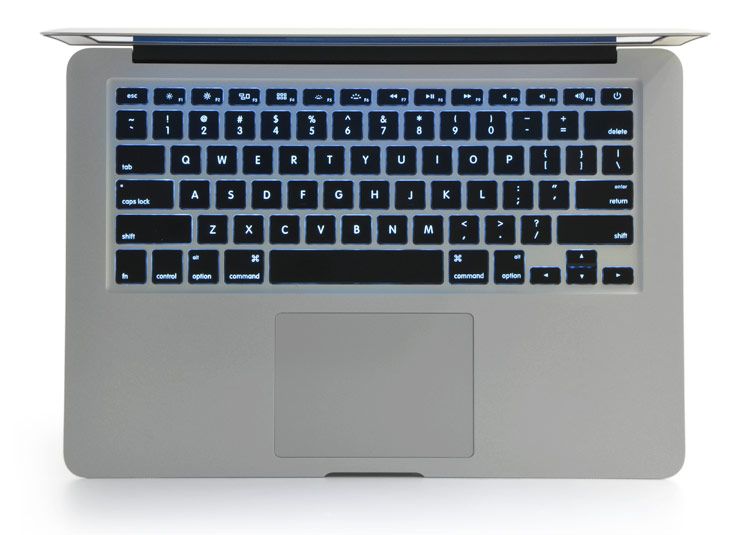


I now buy OLD Lenovo machines (T61 series) and chuck Debian on them. I buy two at a time and stick a (Samsung) SSD in them for less than half the cost of an MBP. One lives in the cupboard as a backup. I have a few spare batteries (9-cell and Ultrabay) sitting around as well.
Also, I find it objectionable purchasing anything that doesn't have a way of isolating the power either i.e. removing the battery. One short on a LiPoly pack and your tech gadget turns neatly into an incendiary device, which is what happened to my 2010 MBP. It nearly burned my house down.
I genuinely don't get all these people who think they are soundly engineered. They are expensive trinkets with no engineering applied past appearance.